
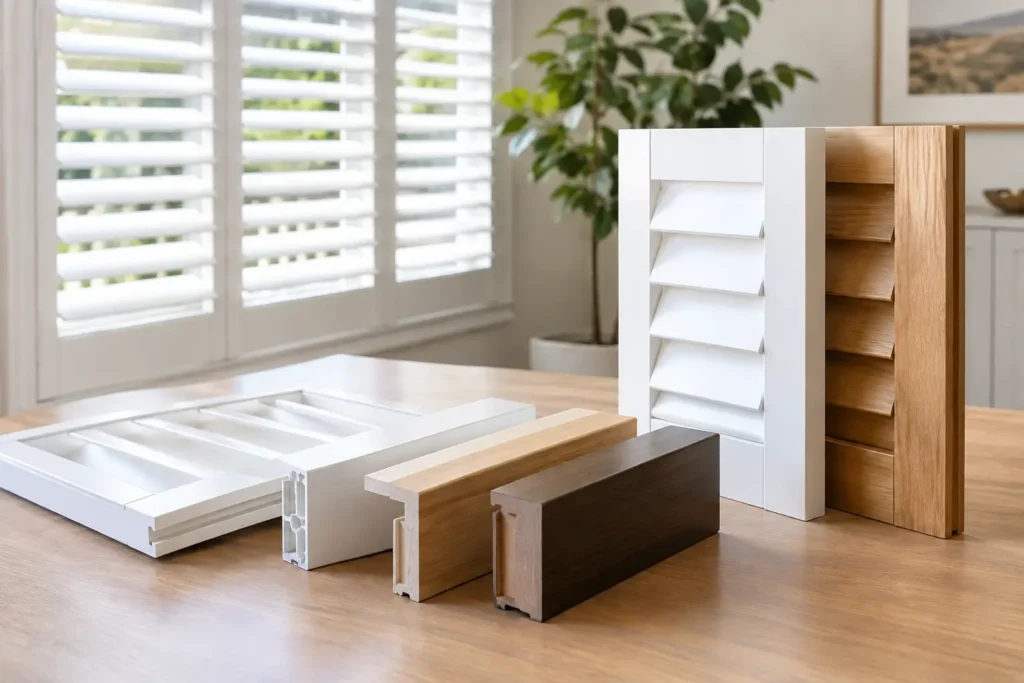
A shutter can look perfect in a showroom and still be the wrong choice for a sunny family room, a humid bathroom, or a wide patio door. The material behind the finish affects how a shutter holds its shape, manages heat, handles moisture, and fits the character of your home. This guide to plantation shutter materials helps you compare the options with the practical conditions of Los Angeles and Orange County homes in mind.
Plantation shutters are a long-term window treatment, not a temporary decorative layer. Because they are custom measured, built into a frame, and used every day, the right material should suit both the room and the way you live in it. A thoughtful choice now can mean years of dependable privacy, light control, and polished style.
Why Shutter Material Matters More Than Many Homeowners Expect
Most plantation shutters have the same familiar components: a frame, hinged panels, louvers, tilt rods or hidden tilt mechanisms, and optional divider rails. Yet those parts perform differently depending on what they are made from. Material influences weight, durability, insulation, paint finish, louver size availability, and the overall price of the project.
Sun exposure is an especially meaningful factor in Southern California. Windows facing west or south may receive intense afternoon heat, while older homes can have openings that are not perfectly square. Bathrooms, kitchens, and laundry rooms introduce humidity and occasional splashing. There is no single best shutter material for every window. The strongest plan often uses one material throughout for visual consistency, then makes practical adjustments where moisture or unusual window sizes call for it.
Guide to Plantation Shutter Materials: The Main Options
Natural wood shutters
Wood remains the premium choice for homeowners who want the warmth, character, and refined detail of a traditional shutter. Quality wood shutters are relatively light for their strength, making them well suited to large windows, tall panels, specialty shapes, and wide openings where excessive weight can become a concern.
Wood also offers excellent design flexibility. It can be painted in a tailored white, soft neutral, or custom color, and it may be stained when the goal is to show the grain. In a Spanish Revival home, a formal dining room, or an interior with natural wood finishes, real wood can bring a level of depth that manufactured materials do not fully duplicate.
The trade-off is care and placement. Wood is not usually the first recommendation for a high-moisture bathroom or a window that is regularly exposed to direct water. It also tends to cost more than composite or vinyl-based alternatives. With a proper finish, accurate installation, and normal indoor use, however, wood shutters can be an excellent long-term investment.
Composite shutters
Composite shutters are engineered from wood-based materials, often with a durable finish designed to provide a smooth, painted appearance. They are a popular middle ground for homeowners who want the substantial feel of shutters without selecting natural wood for every room.
A well-made composite shutter can provide a clean, consistent finish and solid light control. It is often a practical option for bedrooms, living areas, offices, and other dry spaces where durability and budget both matter. Because composite panels can be heavier than wood, panel configuration matters. Wide or tall openings may need additional panels, divider rails, or a design that keeps the shutters operating smoothly over time.
Not all composite products are built the same way. The density of the core, quality of the finish, reinforcement used in larger louvers, and construction of the frame all affect performance. This is one reason a hands-on consultation is more useful than choosing from an online photo alone.
Poly or vinyl shutters
Poly shutters, sometimes called vinyl or polymer shutters, are made with moisture-resistant synthetic materials. They are often the most sensible choice for bathrooms, laundry rooms, kitchens, pool-adjacent spaces, and other areas where humidity is part of daily life.
Their greatest advantage is resilience. A quality poly shutter will not absorb moisture the way wood-based materials can, and it is easy to wipe clean. For busy households, that simple maintenance can be a major benefit. These shutters also work well for homeowners who prefer an even, crisp painted look throughout the home.
There are limitations to consider. Poly shutters are generally heavier than wood, and some products use internal reinforcement to help keep larger panels stable. They are typically offered in a more limited selection of painted colors rather than stains. On oversized or unusually shaped windows, the added weight and available design options may make wood a better fit. The product should be selected based on the opening, not just the room label.
MDF shutters
MDF, or medium-density fiberboard, is an engineered wood product commonly used in value-focused shutter options. When finished well, it can create a smooth painted appearance at a more accessible price point than hardwood. It may make sense for dry, low-humidity rooms where the goal is to achieve the shutter look within a carefully managed remodeling budget.
The key limitation is moisture. MDF can swell or lose integrity if it is exposed to persistent humidity or water, so it is generally not the preferred choice for bathrooms, kitchens with frequent steam, or areas near exterior doors that are often left open during damp weather. It can also be heavier than natural wood, which affects the design of larger panels.
MDF is not automatically a poor choice. It simply needs the right setting, a quality protective finish, and realistic expectations. A knowledgeable shutter specialist can help determine whether the savings are worthwhile for each room.
Match the Material to the Room, Not Just the Look
A coordinated home does not require identical materials at every window. What matters most is a consistent visual finish and a material suited to each environment. A homeowner might choose painted wood shutters for a large front living room window, composite shutters in bedrooms, and poly shutters in bathroom windows. When colors, louver sizes, and frame styles are selected carefully, the result can still feel intentional from room to room.
For a bathroom, moisture resistance should lead the decision. For a wide picture window or bay window, weight and panel size deserve close attention. For a historic home with stained millwork, wood may be worth the added investment. For a rental property or secondary space, a well-made engineered option may provide the right balance of appearance and cost.
Also consider how the shutters will be used. If you want frequent daylight adjustment, choose louvers that are easy to operate and sized for the view you want. Larger louvers create a more open look when tilted upward or opened, while smaller louvers create a more traditional appearance. Material and louver size should be evaluated together because larger louvers can add weight to a panel.
Questions to Ask Before You Choose
The best shutter decision usually comes from looking at the actual windows rather than choosing by material sample alone. During a consultation, ask how the material performs in direct sun, whether it is appropriate for moisture, how large each panel can be, and what reinforcement or hardware supports the design. It is also reasonable to ask about the finish, warranty coverage, cleaning needs, and whether a matching solution is available for specialty windows.
Accurate measurement is equally important. Shutters are built to fit within or around a particular opening, so a small measuring error can affect clearances, panel alignment, and how well the louvers close. Professional installation helps protect the investment by ensuring the frame is level, the panels swing correctly, and the finished treatment looks integrated with the window rather than added on afterward.
A Better Way to Choose Shutters for Your Home
Material samples tell part of the story, but they cannot show how a shutter will look against your wall color, flooring, sunlight, and existing furnishings. Blinds by Design brings the selection process to your home, where you can compare materials and finishes in the rooms that matter. This makes it easier to weigh design goals against practical needs before custom ordering begins.
If you are considering plantation shutters, start with the rooms that need the most help with privacy, glare, or heat. The right material will not only complement the space on installation day. It will continue to make the room more comfortable and easier to live in for years to come.