
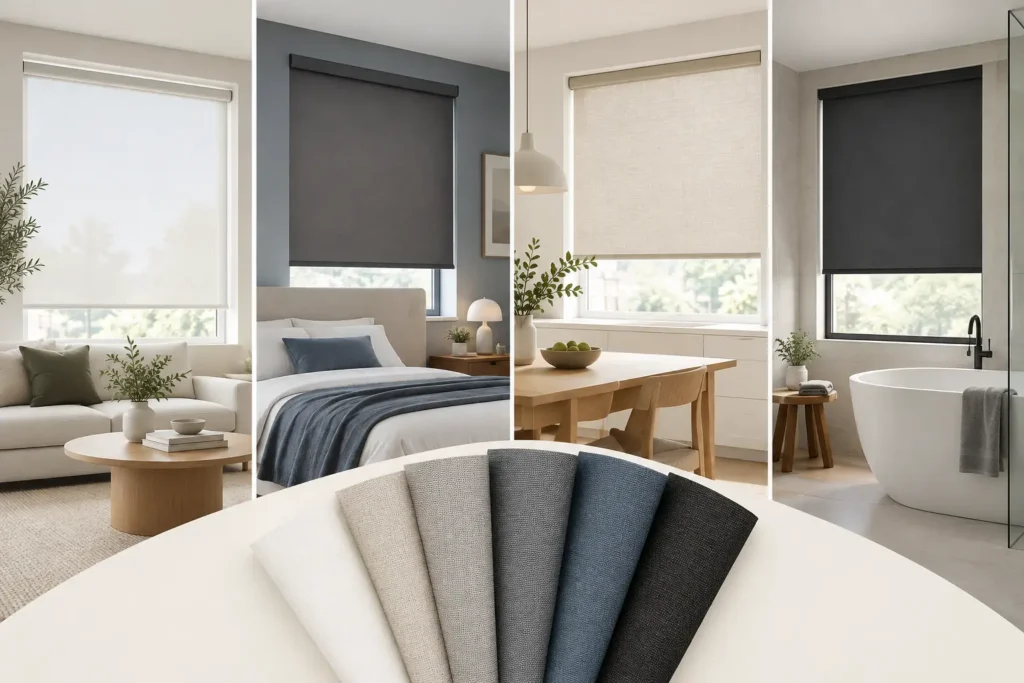
A roller shade can look simple from across the room, but the fabric determines nearly everything you experience day to day: how bright the room feels at 3 p.m., whether neighbors can see in after dark, how much heat reaches your floors, and whether the shade supports or distracts from your decor. This guide to roller shade fabrics helps you make that choice with confidence, especially in Los Angeles and Orange County homes where strong sun, warm interiors, and close neighboring properties often shape the decision.
The best fabric is rarely the one that looks nicest on a small sample alone. It should suit the room’s light exposure, privacy needs, use, and overall design. A custom consultation makes it easier to compare fabrics against your wall color, furnishings, window direction, and the actual light entering the space.
Start With What the Room Needs
Before choosing a color or weave, consider what you need the roller shade to do. A street-facing living room may need daytime visibility with privacy, while a bedroom may need the darkest possible sleep environment. A west-facing office might benefit most from glare reduction and heat control. The right answer can differ from one window to the next, even within the same home.
Roller shade fabrics generally fall into three functional categories: solar screen, light-filtering, and blackout. Decorative fabrics can overlap with light-filtering or room-darkening options, depending on their construction and backing. Each category has a distinct purpose, and each involves a trade-off between view, privacy, and light.
Roller Shade Fabric Types Explained
Solar screen fabrics
Solar screen fabrics are designed to reduce glare, filter ultraviolet rays, and soften direct sunlight while preserving some outward visibility during the day. They are often made with a woven material that has a measurable openness factor, meaning the percentage of open space in the weave.
A lower openness factor, such as 1% or 3%, offers stronger glare reduction and more daytime privacy, but the view out will be less clear. A 5% or 10% openness factor provides a more open view and brighter room, though it allows more light and visibility through the shade. This is a useful option for living rooms, kitchens, home offices, and commercial spaces with attractive views or large expanses of glass.
Solar fabrics are especially practical on sun-facing windows in Southern California. They can help protect hardwood floors, artwork, upholstery, and rugs from fading while making a bright room more comfortable. However, they do not provide full nighttime privacy. When interior lights are on after sunset, silhouettes may be visible from outside. If privacy is a priority, consider pairing solar shades with drapery, side panels, or a second window treatment.
Light-filtering fabrics
Light-filtering roller shade fabrics diffuse sunlight rather than offering a clear view through the material. They create a soft, even glow that can make a room feel calm and welcoming without the harshness of unfiltered daylight.
These fabrics work well in family rooms, dining rooms, kitchens, and spaces where you want privacy during the day without making the room feel closed off. Many homeowners choose light-filtering shades when they want the clean, minimal profile of a roller shade but prefer a softer appearance than a solar screen fabric provides.
Privacy varies by color, weave, and fabric density. A lighter-colored fabric may brighten the room, while a darker fabric can offer a more defined architectural look. Neither choice is automatically better. The right color depends on the light in the room, the window’s exposure, and how closely the shade needs to coordinate with surrounding finishes.
Blackout and room-darkening fabrics
Blackout roller shade fabrics are made to block incoming light through the material itself. They are a strong choice for bedrooms, nurseries, media rooms, and any space where sleep, privacy, or screen viewing matters. Room-darkening fabrics reduce substantial light but may not achieve the same level of opacity as true blackout fabric.
There is one detail worth understanding before choosing blackout: light can still enter around the edges of the shade, particularly with an inside mount. For the darkest possible result, the shade must be properly measured and installed, and you may want an outside mount or side channels where appropriate. Fabric selection matters, but fit matters just as much.
Blackout fabrics are also valuable for windows that face nearby homes, apartment buildings, or busy streets. They provide dependable privacy at night without asking you to compromise on style. Today’s blackout collections include smooth neutrals, subtle textures, woven looks, and patterns that feel tailored rather than heavy.
Texture Changes the Look of a Roller Shade
Once you have narrowed down the level of light control, texture becomes the design decision. Roller shades are available in crisp, modern solids; linen-inspired weaves; natural-looking textures; and refined patterns. A smooth fabric often works beautifully in contemporary spaces, offices, and rooms with clean-lined furnishings. Textured fabrics can add warmth to a neutral room without the visual weight of drapery.
For homes with wood floors, upholstered furniture, and layered finishes, a soft woven texture can make a roller shade feel more integrated into the room. In a minimalist space, a smooth white, warm gray, or charcoal fabric may provide the quiet backdrop the design needs.
Be careful about selecting a fabric based only on a digital image. The same beige can read creamy, gray, or slightly green depending on the home’s lighting. Seeing samples at the window is the most reliable way to judge undertones, opacity, and texture.
Color Affects Light, Heat, and Privacy
Color does more than coordinate with your paint. Light fabrics tend to reflect more daylight and can keep a room feeling airy. Darker fabrics may improve outward view through certain solar screens because they reduce reflected light on the interior side, but they can make a shade more visually prominent when lowered.
For a clean, cohesive look, many homeowners choose a shade close to the wall color or window trim. This approach lets the treatment recede and makes the room feel larger. Choosing a contrasting fabric can be equally effective when you want the shade to frame the window or complement darker cabinetry, black hardware, or a feature wall.
In high-sun areas, also ask about the fabric’s performance characteristics. UV protection, heat reduction, and material quality can have a meaningful effect on comfort and on the longevity of interior finishes. A fabric that performs well in a bright west-facing room may be a more practical investment than one selected for color alone.
Consider Durability and Maintenance
Most roller shade fabrics are low-maintenance, which is one reason they work well for busy households and offices. Regular dusting with a feather duster or the brush attachment on a vacuum is usually enough. For minor spots, follow the manufacturer’s care instructions and avoid soaking the fabric or using harsh cleaners.
The room should guide your durability choices. Kitchens may benefit from materials that are easy to clean and less likely to absorb odors. Homes with children or pets may call for fabrics that hold up well to frequent use. In offices, a consistent fabric across multiple windows can create a polished appearance while simplifying long-term care.
If you are considering motorized roller shades, the fabric weight and shade size should be part of the conversation. Larger windows and heavier fabrics may require a system selected specifically for the application. Professional measuring helps ensure the fabric, roller mechanism, mounting method, and motorization option work together properly.
A Guide to Roller Shade Fabrics by Room
Bedrooms typically benefit from blackout fabric or a layered solution that supports privacy and sleep. Living rooms often suit solar or light-filtering fabrics, depending on whether preserving the view is more important than screening it. Kitchens usually need easy-care materials and comfortable daylight, while home offices benefit from glare-reducing solar fabrics that keep computer screens easier to see.
For bathrooms, privacy should come first. A denser light-filtering or blackout fabric is usually a better fit than an open solar weave. In a media room, blackout fabrics and careful mounting help reduce reflections and create a better viewing environment. For patio doors or oversized windows, consider how often the shade will be raised and lowered, as well as whether motorization would make daily use more convenient.
A single fabric throughout the home can create continuity, but it is not always the most functional approach. Coordinating colors across different fabric types can give you a unified look while allowing each room to meet its own practical needs.
Choosing roller shade fabric should feel less like guessing from a swatch and more like making a design decision with the full room in view. Blinds by Design can bring fabric samples to your home or office, measure each opening, and help you compare the light control, privacy, texture, and operating options that fit your space. A well-chosen custom shade quietly improves the way every room looks and feels, from the first morning light to the last evening at home.