
A window that looks beautiful at noon can become a source of glare, heat, or unwanted visibility by late afternoon. That is why learning how to choose window treatments starts with the way you actually use each room, not simply with a color swatch. The right solution should feel natural in your space while giving you dependable control over light, privacy, comfort, and views.
For homeowners and office decision-makers in Los Angeles and Orange County, sunlight is often a central consideration. Large windows, west-facing rooms, street-facing spaces, and open floor plans can all call for different choices. A custom treatment helps you address those details without sacrificing the look you want.
Start With What the Room Needs Most
Every window has a job to do. In a bedroom, that may mean blocking early morning light and creating privacy. In a living room, it may mean softening sunlight while preserving a view. In an office, glare reduction and a polished appearance may matter more than complete darkness.
Before comparing products, consider what happens in the room throughout the day. Notice where sunlight enters, whether screens or neighboring homes affect privacy, and how much you open the window. Also consider who uses the space. A nursery, media room, home office, and formal dining room each have different practical requirements.
It helps to identify one primary goal and one secondary goal. For example, your primary goal may be heat control in a sunny family room, while your secondary goal is a clean, tailored style. This makes product decisions clearer when there are trade-offs between light filtration, insulation, and appearance.
How to Choose Window Treatments by Light and Privacy
Light control is more than choosing between open and closed. Window treatments can filter harsh daylight, darken a room, direct light upward or downward, or provide adjustable coverage throughout the day.
Consider the direction your windows face
South- and west-facing windows often receive strong direct sun, especially in Southern California. Solar shades can reduce glare and help protect furnishings from fading while maintaining an outward view. Cellular shades can add insulation and soften incoming light. For greater flexibility, adjustable blinds or shutters let you change the angle of the slats as the sun moves.
North-facing windows usually receive softer light, so many homeowners choose treatments that preserve brightness without leaving the room exposed. Sheer or light-filtering shades can be a good fit when privacy is not the main concern.
Decide how much privacy you need after dark
During the day, a light-filtering fabric may provide enough privacy. At night, interior lights can make rooms visible from the outside, particularly on street-facing windows or near close neighbors. Bedrooms, bathrooms, and ground-floor living areas often need more complete coverage.
Room-darkening shades, shutters with properly fitted panels, or blinds with adjustable slats can offer stronger privacy. If you want both soft daylight and nighttime coverage, layering may be the answer. A light-filtering shade paired with drapery, for instance, gives the room more flexibility, though it also adds visual weight and cost.
Match the Treatment to the Window Type
Standard rectangular windows offer the widest range of options. Specialty shapes, sliding doors, bay windows, and oversized openings require more planning. The goal is to choose a treatment that works with the window rather than fighting its operation or architectural features.
For sliding glass doors, vertical blinds, panel-track systems, or vertical cellular shades can provide practical coverage while allowing access to the door. On French doors, treatments need to remain secure when the doors move and should not interfere with handles. For wide windows, separate shades or blinds may be easier to operate than one large unit, but a single treatment can create a cleaner visual line when the product and mounting method allow it.
Shutters can be especially effective for distinctive window shapes because they are custom built to the opening. They bring a structured, finished look to living rooms, dining rooms, and bedrooms, but they are a more permanent visual choice than fabric shades. The best option depends on whether you want the window treatment to blend quietly into the room or become a defining design element.
Choose Materials That Fit Your Lifestyle
The material affects appearance, durability, maintenance, and performance. A beautiful treatment is only a good choice if it suits the demands of the room.
Wood and faux wood blinds offer a classic look with adjustable light control. Faux wood is often the more practical choice in kitchens, bathrooms, and humid areas because it resists moisture and is easy to clean. Real wood brings warmth and natural character, but it may not be ideal where humidity or frequent splashing is expected.
Fabric shades create a softer finish and are available in a wide range of textures, opacities, and colors. Roller shades work well in modern spaces because they have a streamlined profile. Roman shades add more decorative presence, while cellular shades are valued for their energy-efficient construction and insulation. The fabric you choose should reflect both the room’s style and the amount of light you want to manage.
Shutters provide lasting structure, durability, and excellent adjustability. They work particularly well for homeowners looking for a tailored, architectural appearance. Because shutters are custom fitted, accurate measuring and professional installation make a meaningful difference in how they operate and look over time.
Think About Style in the Context of the Whole Home
Window treatments should support the room’s existing finishes, including flooring, wall color, furniture, trim, and hardware. Matching everything exactly can make a room feel flat. Instead, look for materials and colors that coordinate with the overall design.
For a calm, contemporary look, neutral roller shades or cellular shades may disappear neatly into the space. For a traditional or transitional home, wood blinds, woven textures, or shutters can add warmth and dimension. If your room already has bold furniture or patterned rugs, a quieter window treatment often creates balance. In a simple room, the treatment can introduce texture or softness without overwhelming the design.
Do not overlook the size of the treatment when it is raised or stacked. Some shades have a larger stack at the top of the window, while shutters remain visible at all times. If preserving every inch of glass and view is a priority, this detail should be part of your selection process.
Add Convenience Where It Makes Sense
Motorized window treatments are not only for hard-to-reach windows. They can be useful for large rooms with multiple windows, bedrooms where you want scheduled light control, and offices where glare changes throughout the workday. With motorization, several treatments can operate together, making daily adjustments easier and more consistent.
Manual options remain an excellent choice for many windows, especially when the treatment is easy to reach and used occasionally. The right operating system depends on the window location, your routines, and your budget. Cordless designs are often preferred for a clean appearance and can be a safer choice in homes with young children or pets.
Set a Budget Around Long-Term Value
Window treatments vary widely in price because the final cost includes material, size, customization, operating features, and installation complexity. It is tempting to make decisions based on the initial product price alone, but poorly sized or incorrectly installed treatments can create frustration quickly.
Custom treatments cost more than many off-the-shelf options, yet they are designed for the actual dimensions and conditions of your windows. That can mean better coverage, smoother operation, a more finished appearance, and fewer compromises around unusual window sizes. For rooms that receive heavy use or are highly visible, investing in quality materials and professional installation can be worthwhile.
If you are updating several rooms, prioritize the spaces where privacy, heat, or light control are causing the biggest problems. You can build a cohesive plan for the entire home without needing to complete every window at once.
Why Professional Measuring Changes the Result
Window frames are rarely as uniform as they appear. Slight variations in width, depth, trim, and out-of-square openings can affect whether a treatment fits correctly. Mounting choices also matter. An inside mount creates a neat, built-in appearance when the window has enough depth, while an outside mount can make a window look larger and improve coverage.
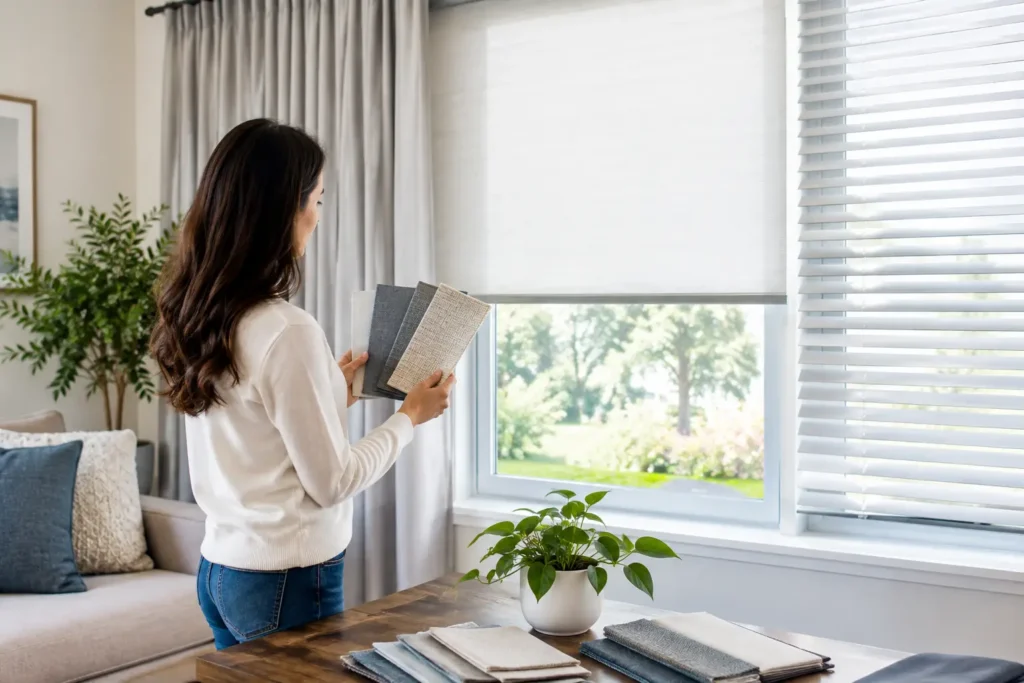
An in-home consultation gives you the advantage of seeing samples against your actual walls, furnishings, and natural light. It also allows a specialist to identify practical concerns that are easy to miss online, such as handle clearance, door movement, mounting surfaces, and how treatments will stack when open.
Blinds by Design brings that process together with in-home measurement, product guidance, customization, and professional installation. Instead of coordinating multiple vendors, you can make decisions with the room, the samples, and an experienced eye all in one place.
The most satisfying window treatments are the ones you stop noticing because they work so well. Schedule a free consultation when you are ready to see materials in your own space and choose a solution that feels right from morning light through the end of the day.