
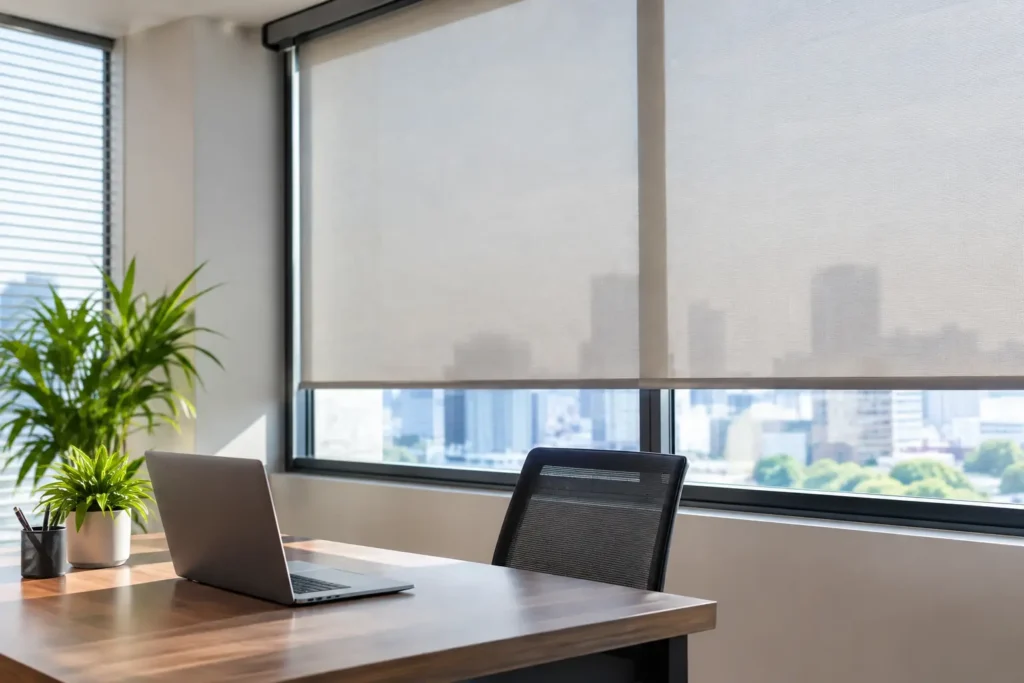
A street-facing conference room, a row of computer screens, or an office with neighboring buildings nearby can make privacy a daily concern. Privacy window treatments for offices do more than block views. The right choice helps protect sensitive conversations, control harsh Southern California sunlight, reduce screen glare, and give clients and employees a more polished setting.
For an office, the best solution is rarely the darkest option available. Privacy has to work alongside natural light, visibility needs, interior design, cleaning requirements, and the way the space is used throughout the day. Custom window coverings make that balance much easier to achieve.
What Office Privacy Really Requires
Office privacy can mean different things from one room to the next. A private medical or legal office may need consistent daytime and nighttime coverage. A conference room may need occasional privacy for meetings but remain open and bright between appointments. In a reception area, the goal may be to soften direct views from the street without making the business feel closed off.
Before selecting a treatment, consider what people can see from outside, from adjacent suites, and from nearby buildings. Also consider whether employees need a view out, whether sunlight moves across the windows during working hours, and whether glass doors or interior partitions need coverage too.
A treatment that looks excellent in a showroom can feel very different once the afternoon sun hits a west-facing office window. This is why on-site measuring and product selection matter. Seeing materials and colors in the actual room helps clarify how much privacy and light control the office truly needs.
Privacy Window Treatments for Offices: Best Options
There is no single best window covering for every workplace. The right product depends on the level of privacy required and the office’s daily routine.
Roller Shades for a Clean, Modern Look
Roller shades are a popular choice for offices because they have a simple profile and are easy to operate. Privacy fabrics are available in different openness levels, which determine how much light and visibility pass through the material.
A lower openness fabric provides stronger daytime privacy and better glare control. A higher openness fabric preserves more outward visibility and natural light, but silhouettes may still be visible under certain lighting conditions. For offices near busy sidewalks or neighboring buildings, a more private fabric is usually the better fit.
Blackout roller shades offer the highest level of coverage. They work especially well in conference rooms used for presentations, offices requiring visual confidentiality, and spaces where afternoon glare makes screens difficult to see. The trade-off is that blackout shades also remove the natural light that can make a workspace feel more comfortable.
Dual Shades for Daytime Light and After-Hours Privacy
Dual shades combine a light-filtering or solar shade with a blackout layer. This gives office managers two useful settings in one window treatment. During business hours, the front shade can filter glare while maintaining a softer view outside. When a meeting, presentation, or after-hours privacy calls for full coverage, the blackout shade can be lowered.
This option is especially practical for multipurpose conference rooms and executive offices. It costs more than a single shade, but the added flexibility can eliminate the need to compromise between daylight and privacy.
Faux Wood Blinds for Adjustable Coverage
Faux wood blinds provide a structured, professional appearance with adjustable slats. Tilting the slats directs light upward or downward while limiting direct views into the office. This makes them a dependable choice for private offices, administrative areas, and spaces that need regular control over changing sunlight.
Unlike fabric shades, blinds allow for more precise adjustments without fully covering the window. They are also durable and relatively easy to clean, an advantage for busy offices. However, because they have individual slats, they may not provide complete privacy at every angle. For a room where confidentiality is critical, a blackout shade or a layered solution may be more appropriate.
Plantation Shutters for Lasting Style and Control
Plantation shutters bring a tailored architectural finish to offices where design is a priority. Their louvers can be tilted to manage views and light, and their solid construction provides a permanent, custom-built appearance.
Shutters are well suited to professional offices, medical practices, boutique workspaces, and client-facing environments that benefit from an elevated look. They are a long-term investment, and they do not roll fully out of sight like shades. Still, their durability, adjustable privacy, and clean lines can make them a smart choice for the right setting.
Do Not Overlook Glass Doors and Interior Windows
Exterior windows are only part of an office privacy plan. Glass entry doors, sidelights, and interior windows can expose meeting rooms, private offices, or employee work areas to unnecessary visibility.
For these areas, the treatment needs to account for clearance, door movement, and hardware. A shade that works well on a fixed window may not operate properly on a frequently used door. Depending on the layout, a custom-fitted roller shade, cellular shade, or a carefully selected blind may offer the best combination of privacy and functionality.
Interior glass presents a different decision. Some businesses want privacy only during meetings, while others want to retain an open-plan feel. A light-filtering shade can soften visibility without making the room feel isolated. A blackout solution is better when visual privacy is nonnegotiable.
Light Control Matters as Much as Privacy
Los Angeles offices often deal with strong direct sun, especially in rooms with west- or south-facing windows. If a treatment blocks views but does not control glare, it may not solve the real problem. Employees may still struggle with reflections on monitors, uneven temperatures near windows, and uncomfortable brightness during the afternoon.
Solar shades can be an effective middle ground for workspaces where daytime glare is the main concern. They reduce glare and UV exposure while keeping the office visually connected to the outdoors. However, solar shades are not designed for full nighttime privacy. Once interior lights are on and it is darker outside, silhouettes can become visible.
That distinction is worth discussing early in the selection process. A product that performs beautifully in the daytime may need a secondary blackout layer for offices that remain occupied after sunset.
Motorization Makes Privacy Easier to Use
Even the best window treatment is less effective if no one adjusts it. Motorized shades make privacy and light control easier to manage in conference rooms, large offices, and windows that are difficult to reach.
With motorization, shades can be raised or lowered together for presentations, scheduled around strong afternoon sun, or adjusted without interrupting a meeting. It also creates a more refined experience in client-facing spaces. For offices with several windows, coordinated operation can keep the room looking organized rather than uneven.
Motorization is not necessary for every office, particularly small rooms with a single accessible window. But it is worth considering when convenience, consistency, and daily use are priorities.
Why Custom Measuring Makes a Difference
Off-the-shelf window treatments can leave gaps at the sides or bottom of the window, which weakens both privacy and light control. In an office, those small gaps can be enough to expose a desk, meeting table, or screen to outside views.
Custom measurements account for the window frame, mounting location, depth, handles, doors, and surrounding trim. Professional installation also ensures treatments operate correctly and sit evenly across a row of windows. The result is a more finished appearance and coverage that performs as intended.
For office decision-makers, the process should be straightforward. A consultation at the workplace allows you to compare materials where they will be used, review privacy needs room by room, and choose a solution that fits the design and budget. Blinds by Design brings that guidance, custom measuring, and professional installation together so your office can feel private without losing its character.
A well-chosen window treatment should let your team focus on work, not on glare, passersby, or whether a room feels exposed. Start with how each space is used, then choose privacy that supports the people inside it.