
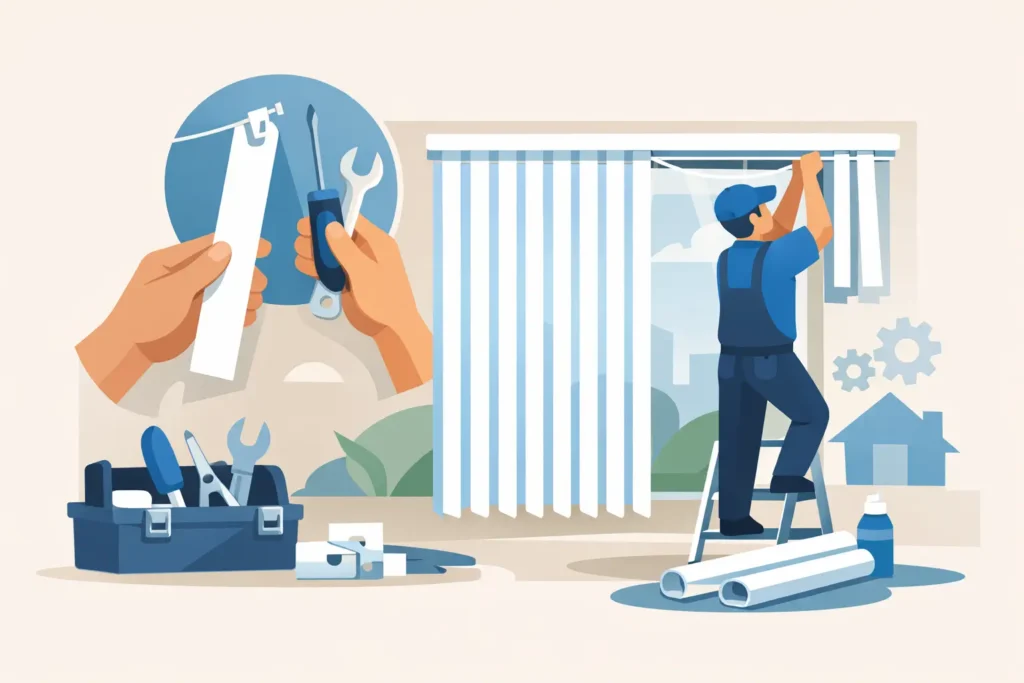
A vertical blind that will not rotate, slides unevenly, or leaves a gap at the window can make an otherwise polished room feel unfinished. The good news is that there are several vertical blinds repair options, and the right one often depends on whether the problem is isolated to a single part or affects the entire system.
For homeowners and office managers in Los Angeles and Orange County, the decision is not always simply repair versus replace. A well-made blind with a healthy track may only need a few replacement components. An older system with brittle vanes, recurring track problems, or an outdated look may be better served by a custom replacement that improves light control, privacy, and the room’s design at the same time.
Start With the Part That Is Actually Failing
Vertical blinds have a straightforward mechanism, but the parts work together. The track holds the carriers that move across the window. Each carrier supports a vane, while a tilt mechanism rotates the vanes open and closed. A wand, chain, cord, or motorized control operates the system.
Because the symptoms can look similar, identifying the failed component matters. A vane that hangs crookedly may have a damaged hanger or a broken vane itself. Blinds that do not traverse across the window may have a carrier issue, an obstruction in the track, or a worn control mechanism. When the vanes refuse to rotate, the problem is often in the tilt gear, stem, or control assembly.
A quick visual check can help. Look for cracked plastic, missing pieces, bent vanes, loose mounting brackets, and debris inside the headrail. Avoid forcing the wand or pulling hard on the vanes. That can turn a small repair into damage affecting several carriers or the full track.
Common Vertical Blinds Repair Options
Replace individual vanes
Replacing one or two damaged vanes is usually the simplest option when the remaining blinds are in good condition. This works particularly well after a pet has bent a vane, a child has pulled one loose, or a single slat has become stained or discolored.
The challenge is matching the replacement. Vertical vanes vary by width, length, material, color, texture, and mounting hole style. Even white can vary noticeably between product lines and years of sun exposure. If an exact match is unavailable, replacing all vanes while retaining the existing headrail can be a practical middle ground, provided the track still operates smoothly.
Replace carriers, stems, or clips
Each vertical vane connects to a small carrier in the headrail. Depending on the blind system, the part that breaks may be the carrier itself, the stem that hangs from it, or the clip that holds the vane in place. These pieces are common sources of trouble because they carry the daily movement of the blinds.
Replacing a single carrier or stem can restore a blind that has one loose, dragging, or non-rotating vane. However, it is worth considering the age of the system. If several plastic parts are yellowed, brittle, or cracking, a one-part repair may only postpone the next issue. In that situation, servicing multiple components at once or replacing the treatment may be more cost-effective.
Repair or replace the tilt control
When all vanes stop turning together, the issue often lies in the tilt mechanism rather than the vanes. A worn gear, stripped mechanism, broken chain, or damaged wand connection can prevent the blinds from opening and closing properly.
Some tilt controls can be replaced if the correct part is available for the existing track. This can be a worthwhile repair on a high-quality headrail. On older or discontinued systems, though, parts may be difficult to source, and installing a universal component is not always reliable. A professional can evaluate whether the control mechanism is serviceable and whether the repair will deliver dependable daily operation.
Clean, realign, or service the track
A vertical blind that catches, sticks, or does not close evenly may not need major parts at all. Dust, paint overspray, bent carrier spacing, or a misaligned headrail can interfere with travel. The track can sometimes be cleaned and adjusted to improve operation.
Lubricants are not a universal answer. Applying the wrong product can collect more dust or damage plastic components. For a blind that continues to jam after basic cleaning, the problem may be internal wear in the carrier assembly or track. That is a good point to call for service rather than repeatedly forcing the mechanism.
Reinstall loose brackets or a sagging headrail
If the entire headrail is loose, crooked, or pulling away from the wall or window frame, the mounting hardware needs attention. This is especially common when blinds were installed into weak drywall, improperly sized anchors, or trim that cannot support the weight of the treatment.
A secure reinstall involves more than tightening a screw. The brackets must be level, properly spaced, and anchored into a suitable surface. This is particularly important for wide patio doors and commercial openings, where a long vertical blind headrail carries more weight and receives frequent use.
When a Repair Is Worth It
Repair tends to make sense when the blinds are custom-sized, the material is still attractive, and the issue is limited to a few replaceable parts. It can also be the best choice for a rental property or office that needs a prompt, budget-conscious correction without changing the room’s overall appearance.
Consider repair when the headrail glides smoothly, most vanes are in good shape, and the mounting is secure. A single broken clip, a few damaged vanes, or a worn wand connection should not automatically mean replacing a full window treatment.
It also helps to think about the location. Vertical blinds on a patio door often receive heavier use than blinds on a seldom-opened side window. Investing in a quality repair for a frequently used opening can be sensible if the underlying system is durable.
When Replacement Is the Better Long-Term Choice
Replacement becomes more appealing when repairs are recurring, parts are discontinued, or the blinds no longer meet the needs of the space. Faded fabric vanes, warped PVC, noisy operation, and multiple broken carriers are signals that the system may be near the end of its useful life.
Design is another consideration. Older vertical blinds can make a remodeled room feel dated, even when they still function. A new custom vertical blind, panel track, roller shade, woven wood shade, or plantation shutter solution can better complement current flooring, wall color, and furnishings while improving privacy and light control.
For large sliding doors, replacement may also offer better day-to-day comfort. Today’s custom options can provide smoother operation, more durable materials, cordless or motorized controls, and a tailored fit that reduces light gaps. The best selection depends on how the room is used, how much sun the opening receives, and whether the priority is privacy, style, insulation, or easy access to the door.
Why Professional Evaluation Helps
Vertical blind repairs can look simple until a discontinued part, a nonstandard track, or an uneven installation complicates the job. Measurements matter, and so does knowing whether a repair will hold up after regular use. An experienced window treatment professional can assess the track, identify compatible components, and explain the practical difference between a targeted repair and a replacement.
For clients who choose to update, a consultation at home or in the office makes the decision easier. Seeing materials and colors at the actual window gives a far better sense of how they will work with the light, décor, and privacy needs of the room. Blinds by Design provides this kind of personalized guidance, along with professional measurement, product selection, and installation.
Before choosing from the available vertical blinds repair options, consider how often the blind is used, how many components have failed, and whether you still like the way it looks in the space. A small repair can be the right answer, but a thoughtfully chosen replacement can make a busy patio door or wide office window easier to use and more enjoyable to live with every day.