
The wrong motorized shade usually does not look wrong at first. It goes up and down, the remote works, and the room feels updated. A few weeks later, that is when the problems show up – light leaking around the edges, fabric that fights the style of the room, noisy operation, or controls that feel more complicated than convenient. A good motorized shades buying guide should help you avoid that kind of expensive guesswork.
For homeowners and property decision-makers in Los Angeles County and Orange County, motorized shades are often about more than convenience. They help manage strong sun exposure, improve privacy, protect interiors from fading, and give larger or hard-to-reach windows a cleaner, easier solution. The key is choosing a system that fits the room, the window, and the way you actually live.
What to know before buying motorized shades
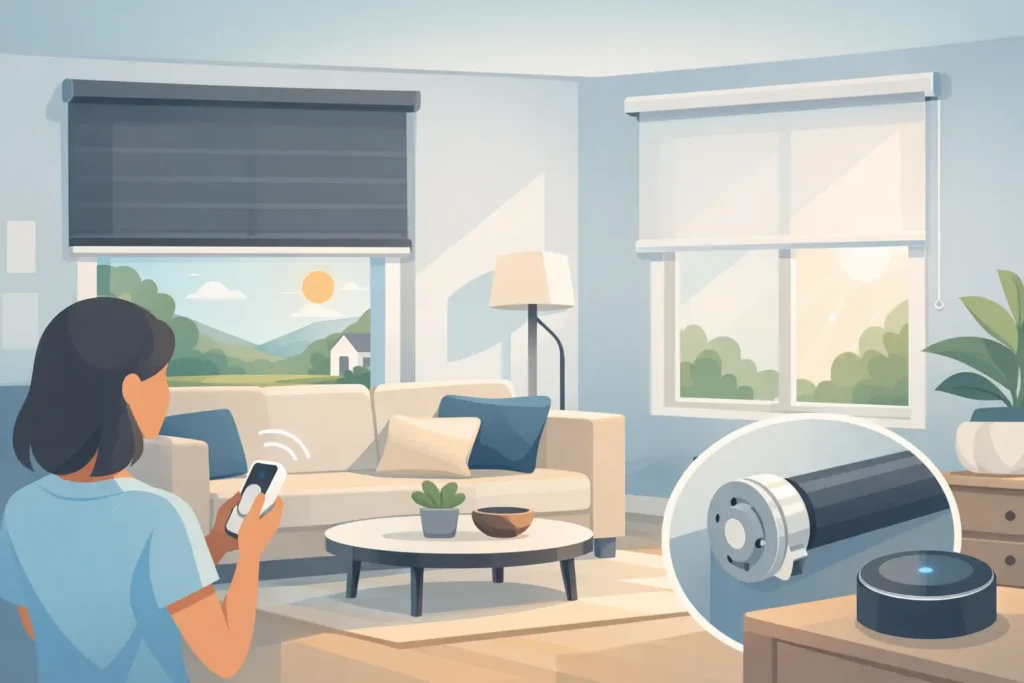
Motorized shades are custom window treatments powered by a battery, rechargeable pack, or hardwired electrical connection. Instead of raising and lowering them by hand, you control them with a remote, wall switch, app, voice assistant, or programmed schedule.
That sounds straightforward, but the buying decision is rarely just about the motor. The bigger question is how the entire shade system will perform in your space. A bedroom with early morning glare has different needs than a street-facing living room, an office conference room, or a sliding glass door in full afternoon sun.
This is why measurements, fabric selection, mounting style, and installation matter as much as the automation itself. A motorized option should make your home more comfortable and polished, not add another device that feels fussy.
A practical motorized shades buying guide for key decisions
The best place to start is with the window itself. Size, height, sun exposure, privacy needs, and whether the shade will be used once a day or several times an hour all affect what you should buy.
Choose the right shade style first
Many buyers focus on smart features before they choose the actual shade style. That usually leads to a mismatch. Start with the look and function you want, then pair it with the right motorization.
Roller shades are one of the most popular choices because they are clean, modern, and work well with motorization. They suit living rooms, offices, bedrooms, and wide glass openings. Solar shades are a strong option when you want to reduce glare and UV exposure while keeping some daytime view. Roman shades create a softer, more decorative look, but fabric stacking and fold depth should be planned carefully, especially on larger windows.
If your room needs room-darkening or blackout performance, not every fabric will deliver the same result. Some materials filter light beautifully but still allow silhouettes or glow at night. Others block much more light but can feel heavier visually. There is no universal best choice here – it depends on whether your priority is privacy, darkness, view preservation, or design softness.
Think carefully about power source
Most motorized shades use either battery power or hardwiring. Both can be excellent, but they fit different situations.
Battery-powered shades are popular in finished homes because installation is simpler and walls usually do not need to be opened. They work well in many residential spaces and are often the practical choice for retrofit projects. Rechargeable systems can also reduce the hassle of replacing standard batteries.
Hardwired shades make sense when you are remodeling, building new, or planning a larger whole-home system. They can be ideal for high-use windows and for clients who want a more permanent integrated setup. The trade-off is upfront planning. If wiring is not addressed early, hardwired solutions can become more disruptive and more expensive to install later.
Decide how you want to control them
Control options matter more than people expect. A shade that can be controlled six different ways is not automatically better if you only use one of them.
Some households are happiest with a simple handheld remote. Others prefer wall switches for a cleaner everyday routine. App control is useful when you want to adjust shades while away from home or build scenes and schedules. Voice control can be convenient, especially in rooms where your hands are full, but not every homeowner wants to rely on a smart speaker for basic privacy and light control.
A good rule is to keep the experience intuitive. If the system feels easy for everyone in the home, you are more likely to use it consistently.
Consider how the room is used
Motorized shades should solve a real problem in the room. That sounds obvious, but it is where the smartest buying decisions usually happen.
In bedrooms, most buyers care about privacy, light control, and quiet operation. Here, room-darkening or blackout fabrics often make sense, especially for windows that catch early morning light. In living rooms, you may want filtered natural light during the day and privacy in the evening, which can point to a different fabric and openness level.
For home offices, glare reduction is often the main issue. A shade that looks beautiful but leaves your screen washed out by 2 p.m. is not doing its job. In spaces with large windows or tall ceilings, motorization becomes less of a luxury and more of a practical everyday improvement. It removes the struggle of reaching awkward windows and helps keep the look of the room consistent.
Office and commercial settings often need a more polished, uniform appearance across multiple windows. In those projects, reliability, ease of operation, and consistent installation become especially important.
Fabric, color, and openness matter more than the motor
This is where many buying guides stay too general. The motor gets attention because it feels like the feature, but the fabric is what you will see every day.
Color changes how the shade reads in natural and artificial light. A tone that looks soft and neutral in a sample can appear much warmer or cooler once installed across a large window. Texture also matters. Smooth modern fabrics create a different effect than woven or linen-look materials.
If you are considering solar shades, openness factor deserves close attention. A more open weave can preserve more view, but it may offer less privacy and less glare control. A tighter weave increases privacy and sun protection, but it can also reduce visibility and make the room feel more closed in. The right balance depends on your exposure, your proximity to neighbors, and how you use the room.
This is one reason in-home selection is so valuable. Looking at colors and materials in the actual room gives you a far better sense of the result than choosing from small samples in isolation.
Do not overlook measuring and installation
Motorization raises the stakes on precision. With manual shades, a slight measuring issue may be annoying. With motorized shades, it can affect alignment, operation, appearance, and how cleanly multiple shades move together.
Inside mount versus outside mount should be decided with purpose, not habit. Inside mounts can look streamlined, but they depend on adequate window depth and still allow some side light gaps. Outside mounts can improve light control and visual coverage, especially when privacy or darkening is a top priority.
Professional measuring also helps identify challenges early, like uneven window frames, limited mounting space, recessed trim, or nearby doors and handles that can interfere with operation. Proper installation is what gives motorized shades that clean, quiet, effortless feel people expect.
Budgeting for motorized shades realistically
Motorized shades cost more than manual shades, but the value comes from more than the motor itself. You are paying for convenience, custom sizing, cleaner daily operation, and a more finished result.
Price varies based on shade style, fabric, window size, number of windows, motor type, control system, and installation complexity. Large openings, specialty windows, and whole-home automation will naturally increase cost. So will premium fabrics and layered solutions.
If budget matters, it often makes sense to prioritize the rooms where motorization will have the biggest impact first. Bedrooms, media rooms, living areas with strong sun, and tall or oversized windows are common starting points. You do not always need to automate every window at once to get meaningful benefit.
When expert guidance makes the process easier
A true motorized shades buying guide should leave room for one honest answer: it depends. The best solution is rarely chosen by looking at specs alone. It comes from seeing the room, measuring correctly, understanding how much sun the space gets, and matching the product to your design goals and daily routine.
That is why a full-service process matters. When someone helps you compare styles, fabrics, controls, and mounting options in your own home, the decision becomes clearer. For many local homeowners, Blinds by Design simplifies that process by bringing product options directly into the space, guiding the selection, and handling professional installation from start to finish.
If you are considering motorized shades, think beyond the feature list. Ask how the shade will look at noon, how it will feel at bedtime, and how easy it will be to use six months from now. The right choice should feel natural in the room and easy in your routine.