
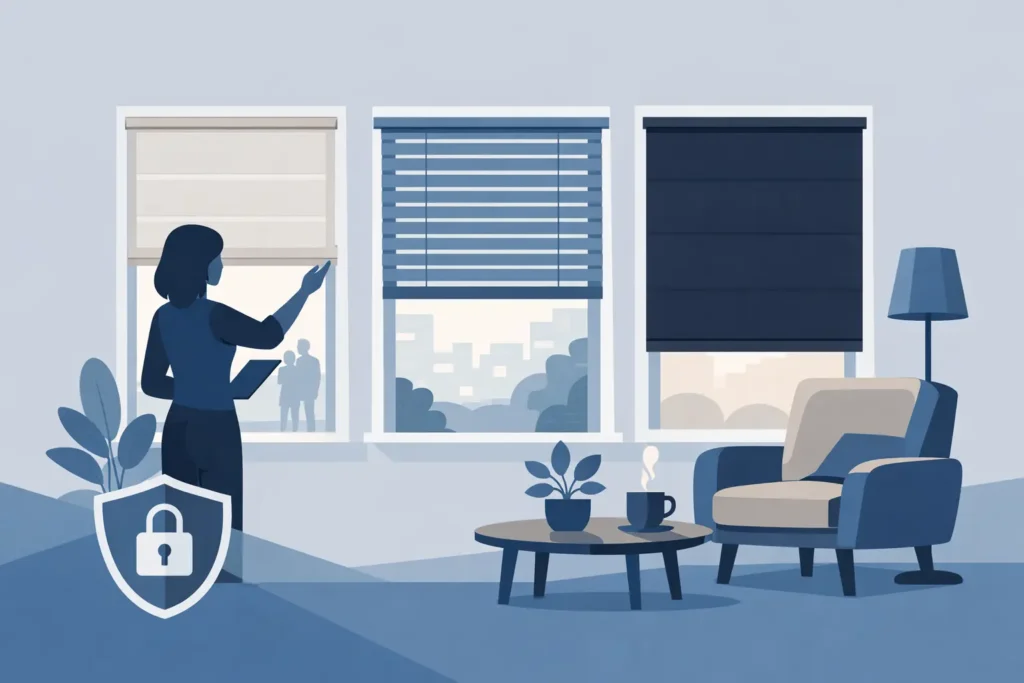
A front-facing window can make a living room feel open and bright, but it can also put the room on display the moment the sun goes down. That is why choosing privacy shades is about more than covering glass. The right treatment gives you control over visibility, daylight, temperature, and the overall feel of a room without making the space feel closed in.
For homeowners and office clients across Los Angeles and Orange County, the best choice depends on where the window faces, how the room is used, and how much privacy you want at different times of day. A beautiful shade that does not provide enough coverage will become frustrating quickly. On the other hand, a fully opaque option may be too limiting for a room that needs soft natural light.
Start With the Level of Privacy You Need
Privacy is not one-size-fits-all. A bedroom near a neighboring home has different needs than a kitchen window facing a fenced yard. Before selecting fabric, color, or operating style, think about what someone outside can see during the day and after dark.
Sheer and light-filtering shades soften direct sunlight and reduce visibility from outside during the day. They are a good fit when your priority is a bright, welcoming room with some daytime privacy. At night, though, interior lighting can make silhouettes more visible. If your home is close to another property or a busy street, light filtering alone may not be enough.
Room-darkening and blackout shades provide greater coverage. Room-darkening fabrics significantly reduce light and visibility, while blackout materials are designed for the strongest possible light control. Blackout shades are often a smart option for bedrooms, nurseries, media rooms, and any space where privacy after dark is nonnegotiable.
There is also a middle ground. Dual shades, layered window treatments, and top-down/bottom-up styles can give you privacy where you need it while keeping daylight available. This flexibility is especially valuable in Los Angeles homes, where bright sun is often something to enjoy rather than block completely.
Choosing Privacy Shades by Room
The room should guide the decision. A shade that works perfectly in a primary bedroom might feel too heavy in a dining room or home office.
Bedrooms and nurseries
Bedrooms usually call for the highest level of privacy. Blackout roller shades, cellular shades with blackout fabrics, and Roman shades with a privacy lining are all practical choices. If morning light is a concern, remember that light can still enter around the edges of a shade. A custom-fit treatment mounted and installed correctly helps minimize those gaps.
For a nursery, consider both light control and operation. Cordless shades are a cleaner, safer choice, while motorization can make nap-time routines easier. A motorized blackout shade also allows you to adjust a hard-to-reach window without disturbing the room.
Bathrooms
Bathrooms need privacy at all hours, but they also bring moisture into the equation. Faux wood blinds, roller shades made with moisture-resistant materials, and certain cellular or woven options can work well depending on the location of the window.
Avoid selecting a material based on appearance alone. A fabric that looks right in a dry bedroom may not hold up as well near a shower. The window’s distance from steam and direct water exposure should be part of the recommendation.
Living rooms and family rooms
In common areas, most homeowners want daytime privacy without losing the natural light that makes the room feel inviting. Solar shades are often a strong option because they reduce glare and UV exposure while preserving an outward view. Their openness factor matters: a more open weave lets in more light and visibility, while a tighter weave provides more privacy and sun control.
For evening privacy, pair solar shades with drapery panels or select a dual-shade system that combines a solar layer with a room-darkening layer. This approach gives the room a polished, layered look and lets you adapt the treatment as the light changes.
Street-facing windows
Street-facing windows deserve extra attention. Even a ground-floor room with a modest setback may need more coverage once indoor lights are on. Top-down/bottom-up cellular shades are especially useful here. You can lower the shade from the top to bring daylight into the room while keeping the lower portion of the window covered.
This style is also a good answer for homes with attractive upper-window views but limited privacy at eye level. It gives you control without forcing you to choose between sunlight and privacy.
Home offices and commercial spaces
Office privacy often includes glare control. A laptop screen facing a sunny window can become difficult to use, while a conference room may need privacy for meetings without feeling dim all day. Solar roller shades and light-filtering roller shades create a clean, professional appearance while managing sunlight.
For spaces where confidentiality matters, room-darkening shades may be more appropriate. Motorization is worth considering for large offices, conference rooms, or banks of windows that need to be adjusted quickly during presentations.
Fabric Opacity Is Only Part of the Answer
When choosing privacy shades, fabric opacity gets most of the attention, but the way a shade is made and installed matters just as much. A blackout fabric will not perform like a blackout system if it is mounted in a way that leaves wide side gaps. Likewise, an inside-mounted shade can look tailored and refined, but it may allow more edge light than an outside mount.
An outside mount extends beyond the window opening, which can improve coverage and make a small window appear larger. It is often the better choice when maximum privacy or room darkening is the goal. An inside mount sits within the window frame and offers a more built-in appearance, but accurate measurements are essential.
Window shape, trim depth, handles, and nearby doors can all affect which mounting approach is practical. This is one reason an in-home measurement is so valuable. It prevents an attractive product choice from becoming an installation compromise.
Consider Direction, Sun Exposure, and Heat
Los Angeles sunlight can be intense, particularly on west- and south-facing windows. Privacy shades should help you manage that heat and glare rather than simply block views from outside.
Cellular shades are a popular choice for insulation because their structured pockets help reduce heat transfer through the glass. They can be especially helpful in bedrooms, upstairs rooms, and areas that feel uncomfortably warm in the afternoon. Solar shades are another practical solution when you want to cut glare and UV exposure while maintaining a connection to the outdoors.
The trade-off is visibility. The more a shade blocks sunlight and views, the more privacy it generally provides. There is no universally perfect opacity. A room with a scenic backyard may benefit from a more open solar fabric, while a window facing a neighboring property may call for a tighter weave or a second layer for nighttime coverage.
Choose an Operating Style That Fits Daily Life
A privacy shade only works when it is easy to use. If you avoid adjusting it because the window is behind furniture or the controls are inconvenient, you will not get the privacy or light control you paid for.
Cordless operation creates a clean look and is a sensible choice for homes with children or pets. Continuous-loop controls can be useful for larger or taller shades. Motorized shades are ideal for high windows, wide openings, and rooms where several shades need to move together. They also make it easy to schedule adjustments around the time of day, which is helpful for sun-facing rooms and evening privacy.
For some homeowners, motorization is mainly about convenience. For others, it is the difference between using the shades consistently and leaving them in one position all week. The right answer depends on your windows, routine, and budget.
Make Privacy Work With Your Interior Design
Privacy does not have to mean heavy or plain. Roller shades can look minimal and modern. Roman shades add softness and fabric texture. Woven wood shades bring warmth, though they may need a liner when more privacy is required. Cellular shades offer a neat, versatile profile in a wide range of colors.
Consider the shade as part of the entire room, including wall color, flooring, furniture, and window trim. White or neutral shades often create a quiet, coordinated look, while a textured fabric can add depth without becoming a focal point. In a more traditional room, a tailored Roman shade may feel natural. In a contemporary office, a streamlined roller shade may be the better fit.
The key is to avoid choosing solely from a small online image or showroom sample. Fabric can look different against your walls and in the natural light of your actual room. Seeing options at home makes color, texture, and privacy levels much easier to judge.
Why Custom Measurement and Installation Matter
Privacy shades need to fit precisely. Small measuring errors can create uneven gaps, interfere with window operation, or leave more visibility than expected. Professional installation also ensures brackets are secure, shades operate smoothly, and motorized systems are properly set up.
Blinds by Design brings the selection process to your home or office, so you can compare materials and operating options in the space where they will be used. With more than 23 years of experience, the team can help identify practical details that are easy to miss, from a shallow window frame to afternoon glare on a west-facing wall.
If privacy is your priority, start by standing outside your home after dark and looking at each window from the street or yard. You will quickly see which rooms need stronger coverage, which need better light control, and where a custom solution can make everyday living feel more comfortable.