
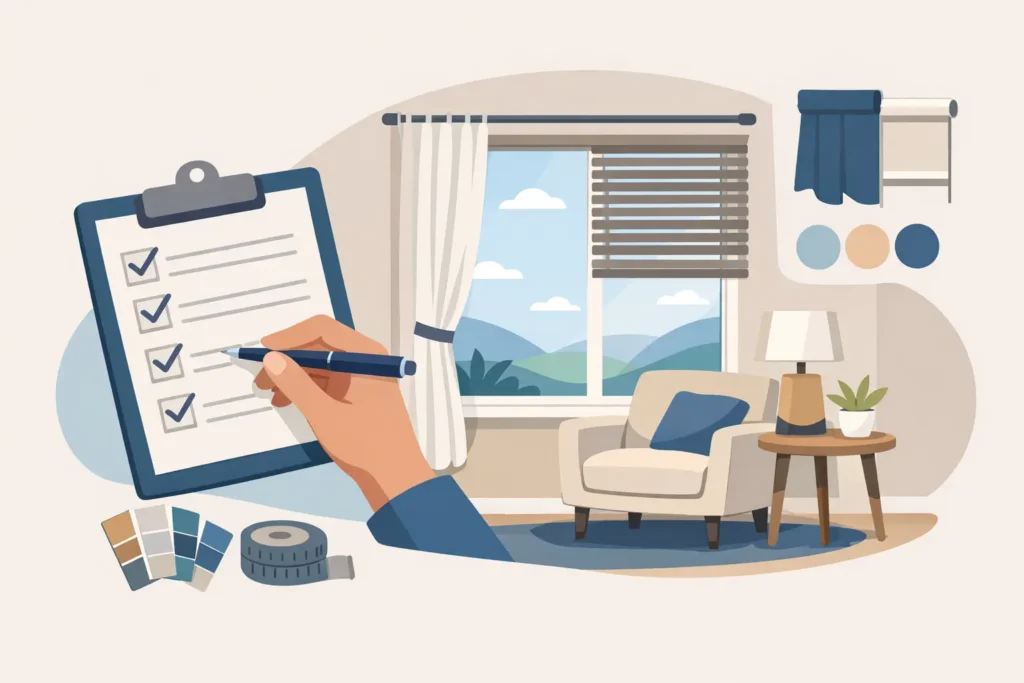
A great window treatment consultation does more than select a color or fabric. It solves the daily frustrations you notice in a room: afternoon glare on the television, a bedroom that feels too exposed at night, heat pouring through a west-facing window, or a home office that needs a cleaner, more professional finish. This window treatment consultation checklist helps you prepare for an in-home appointment so the recommendations reflect how you actually live and work.
Custom shutters, blinds, and shades should fit the window, but they also need to fit the room’s purpose, your design preferences, and the way you want to control light and privacy. A few decisions made before your consultation can make the process easier and help you compare options with confidence.
Start With the Room’s Real Needs
Before looking at materials or colors, consider what happens in the space throughout the day. A kitchen window may need an easy-to-clean treatment that handles moisture and frequent use. A nursery may need room-darkening coverage and cordless operation. A living room might call for softened daylight without sacrificing the view, while an office may benefit from glare control that still keeps the space bright.
Walk through each room you want to address and make a quick note of the main problem you want the treatment to solve. In Los Angeles and Orange County homes, sun exposure is often a major factor. Windows facing west or south can bring in intense afternoon light and heat, especially in rooms with large glass doors or older windows.
Think about whether your top priority is privacy, insulation, light filtering, room darkening, UV protection, style, or convenience. Most custom products can balance several of these goals, but there are trade-offs. For example, a sheer shade can beautifully diffuse daylight, but it will not create the same level of nighttime privacy as a room-darkening shade or plantation shutter.
Your Window Treatment Consultation Checklist
Bring your priorities into the consultation in a clear order. You do not need to know exactly which product you want. That is what design guidance and a mobile showroom are for. You should, however, be ready to explain what you want the finished room to feel and function like.
Identify Your Light-Control Preferences
Light control is not an all-or-nothing choice. Decide whether you want to filter harsh sunlight, block it almost completely, direct it away from screens, or preserve as much of the view as possible. The right choice depends on the window’s orientation, the time of day you use the room, and how much privacy you need.
Shutters offer adjustable louvers that allow you to redirect sunlight while maintaining a tailored architectural look. Horizontal blinds also offer flexible tilt control and can be a practical choice for many rooms. Roller, solar, cellular, Roman, and layered shades each handle light differently, from gentle filtering to substantial room darkening.
If you are considering blackout treatments, ask where light gaps matter most. A bedroom may need a stronger solution than a guest room, for example. Mounting style, fabric opacity, side gaps, and the window’s shape all affect the final result.
Consider Privacy During Day and Night
Privacy changes after sunset. A material that appears private during the day may become more transparent at night when interior lights are on. This is especially relevant for street-facing living rooms, bathrooms, bedrooms, and first-floor windows close to neighboring homes.
Tell your consultant which windows feel exposed and when. You may want top-down bottom-up shades for a room that needs daylight but benefits from covering the lower portion of the glass. For a bathroom, moisture-resistant blinds or shutters can provide dependable privacy without introducing a fabric that is difficult to maintain in a humid environment.
Measure the Space Beyond the Window
Professional in-home measurement is essential for a custom fit, but it helps to look around the window before the appointment. Note nearby furniture, window cranks, molding, doors, air vents, and built-in shelving. These details can influence whether an inside mount or outside mount makes more sense and whether a treatment needs extra clearance.
For sliding glass doors, French doors, bay windows, and unusually shaped openings, function matters as much as appearance. The treatment must allow the door or window to operate comfortably. A polished installation accounts for these practical details rather than treating every opening as identical.
Take a few photos of rooms you are discussing, especially if you have paint samples, furniture fabrics, flooring, or a rug that establishes the color direction. They can help your consultant recommend finishes that feel intentional rather than merely close enough.
Decide How You Want to Operate Each Treatment
Operation is easy to overlook until you picture opening and closing every window each day. Standard cordless options are often a smart choice for accessible windows, while motorized shades can be especially helpful for tall windows, hard-to-reach areas, wide openings, and rooms with multiple treatments.
Motorization can also add daily comfort. You can raise shades in the morning, lower them during the brightest part of the day, and create more privacy in the evening without moving from room to room. It is worth discussing how often you adjust each window treatment and whether the convenience justifies the investment in the spaces you use most.
If children or pets are in the home, mention that early. Cordless and motorized options can reduce concerns associated with exposed operating cords while keeping the room easy to use.
Match the Treatment to Your Design Direction
Window coverings are a visible part of the room, even when they are open. During your consultation, share the design direction you prefer: warm and traditional, clean and modern, coastal, transitional, minimal, or something else. A photo from your own home is often more useful than a broad label.
Wood and composite shutters can create a structured, built-in appearance. Woven shades add texture and warmth. Roller shades feel clean and understated, while Roman shades bring softness and fabric presence. Blinds can provide crisp lines and practical adjustability. There is no single best product because the best choice depends on the room and the look you want to maintain.
Color deserves the same attention as style. Rather than matching one paint color exactly, consider the room’s undertones, flooring, cabinetry, and the amount of natural light. A bright window can make a fabric appear lighter than it did in a store. Viewing samples in your home helps you judge color and texture under the conditions where the treatment will live.
Set a Comfortable Budget and Project Scope
Be open about whether you are furnishing one room, replacing treatments throughout the house, updating a rental property, or preparing an office. Your project scope affects which products deliver the strongest value. Sometimes it makes sense to invest in premium motorized shades for a high-ceiling living room while choosing a simpler, durable blind for a secondary bedroom.
A budget conversation should include more than the product price. Custom sizing, materials, mounting requirements, professional installation, and specialty features all contribute to the final investment. Ask what is included and which choices affect price most. This allows your consultant to present options that meet your priorities rather than showing products that do not fit your plans.
For office spaces, think about consistency across visible areas, employee comfort, screen glare, and the ability to maintain the treatments over time. A coordinated solution can make a workplace look more finished while supporting everyday productivity.
Questions Worth Asking During the Appointment
Use the consultation to understand how each recommendation will perform after installation. Ask how the product handles heat, glare, privacy, cleaning, and regular operation. For motorized treatments, ask what controls are available and how they work in your home or office. For shutters and blinds, ask about material differences, particularly in humid rooms or windows exposed to strong sun.
It is also helpful to ask about lead times, installation preparation, and whether you need to move furniture before the installer arrives. Clear expectations make the process simpler from the first measurement through the final adjustment.
A free in-home consultation from Blinds by Design gives you the opportunity to compare samples, finishes, and operating options where they matter most: at your own windows. Come prepared with the room’s needs, a few design references, and honest budget priorities. The right custom treatment should make the room feel more comfortable every time you walk in, not simply look finished on installation day.