
A west-facing living room can be comfortable at breakfast and nearly impossible to enjoy by late afternoon. That is where the choice between motorized shades versus manual becomes more than a design decision. The right operating system affects how often you use your shades, how well you manage glare and privacy, and how the finished window treatment supports daily life.
For Los Angeles and Orange County homeowners, the answer is rarely a simple matter of one option being better. Motorized and manual shades can both look polished, provide effective light control, and be customized to the window. The better choice depends on the room, the shade style, the window location, your budget, and the level of convenience you want to build into your home or office.
Motorized Shades Versus Manual: The Real Differences
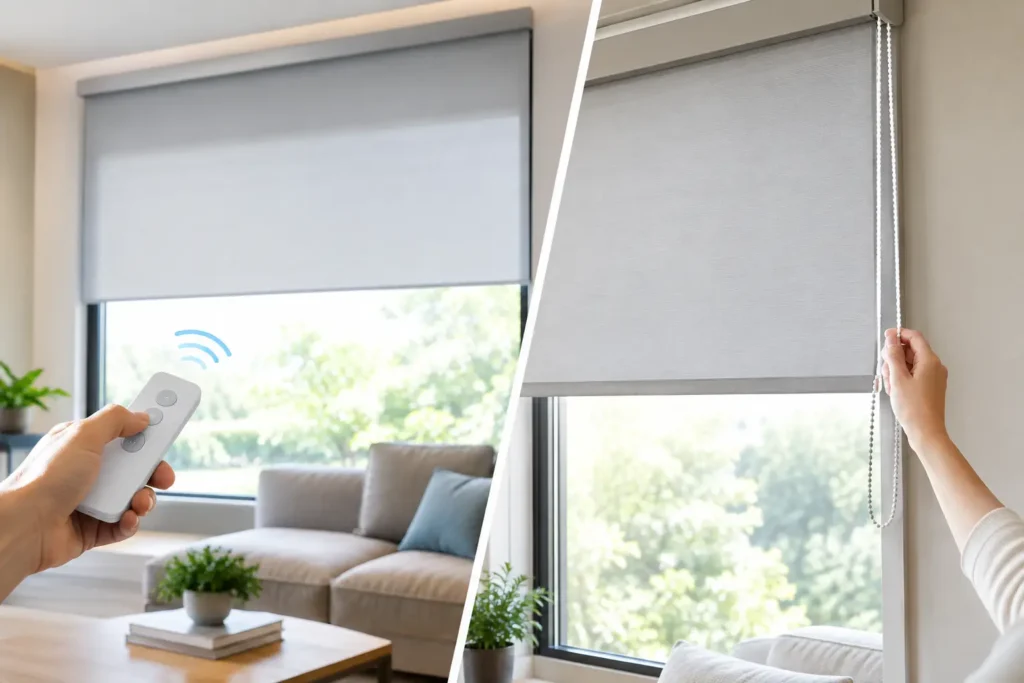
Manual shades are operated by hand, typically with a cordless lift system, a continuous loop, or a simple wand, depending on the product. They are familiar, dependable, and straightforward. For accessible windows that are adjusted only once or twice a day, manual operation is often all a room needs.
Motorized shades use a concealed motor controlled by a remote, wall control, app, or home automation system. With one command, you can raise or lower a single shade, a group of shades, or treatments throughout a room. Some systems can also follow schedules, which is useful when sunlight arrives at predictable times.
The visual difference is usually minimal. Both options can be made in the same fabrics, colors, opacities, and shade styles. A woven shade can retain its relaxed texture, a roller shade can remain crisp and modern, and a cellular shade can still offer an energy-conscious choice. The operating system changes the experience, not necessarily the design direction.
Motorization is especially valuable when the shades are difficult to reach. Think high windows above a staircase, windows behind a deep sofa, wide banks of glass doors, or a conference room with several large openings. In those situations, a motor can turn a treatment that would be inconvenient to adjust into one that is used every day.
Convenience, Privacy, and Light Control in Daily Use
The strongest argument for motorized shades is consistency. When glare hits a television screen or afternoon heat begins warming a room, people are more likely to close shades if it takes one button instead of walking around the room and adjusting each window individually. This can make a noticeable difference in rooms with multiple windows or large expanses of glass.
Scheduled operation adds another practical layer. A bedroom shade can lower in the evening for privacy and rise in the morning. Shades in a sun-exposed family room can close during the hottest part of the day, then open later to bring back natural light. For a vacant property, vacation schedules can also create the appearance of regular activity.
Manual shades still offer excellent control, particularly for smaller spaces. A cordless shade in a guest room, bathroom, or home office is quick to operate and easy for visitors to understand. Manual options also work well when each window needs individual adjustment. If you prefer to fine-tune light at different times of day, a simple hand-operated shade may feel entirely natural.
For homes with children or pets, cordless manual shades and motorized shades both reduce the concerns associated with exposed lift cords. The right product should be selected with the room’s use and occupants in mind, not just its appearance.
How Cost Changes the Decision
Manual shades generally have a lower initial cost because they do not require motors, controls, batteries, or electrical planning. For a home with many standard, easy-to-reach windows, choosing manual operation can preserve more of the budget for premium fabrics, blackout linings, or upgraded design details.
Motorized shades cost more upfront, and the price depends on the number of shades, motor type, control method, and whether hardwired power is available. Battery-powered systems are often a practical option for existing homes because they avoid opening walls for new wiring. Hardwired motorization may be appealing during construction or a major remodel, especially for rooms with many shades that will be operated frequently.
It helps to weigh the investment against the windows that create the most friction. You do not have to motorize every window in a home. Many clients choose motorization for tall windows, large sliding doors, primary bedrooms, media rooms, and major living areas while keeping secondary spaces manual. This approach puts convenience where it will matter most.
Maintenance is also worth considering. Quality manual systems have fewer components, while motorized systems may eventually need battery replacement, charging, or service. Professional measurement and installation reduce avoidable issues with either choice, including uneven operation, improper mounting, and poor coverage at the edges.
Choosing by Room, Not by Trend
A room-by-room approach produces better results than treating motorization as an all-or-nothing upgrade. In a primary bedroom, motorized blackout or room-darkening shades can make mornings and evenings more comfortable without leaving the bed. In a living room with tall windows, they make it easier to protect furnishings from direct sun while keeping the space inviting.
In kitchens, manual shades are often a sensible choice for standard windows that are within reach. In a home office, the decision depends on the orientation of the windows and the work taking place. If video calls, monitors, or strong afternoon glare are daily concerns, motorization can make the space more functional. If light needs are modest, manual shades may offer everything required.
Office settings deserve the same consideration. A reception area with large front windows may benefit from motorized shades that can be adjusted quickly when sun conditions change. Individual offices or smaller meeting rooms may be well served by manual treatments. The goal is not to add technology for its own sake. It is to make privacy, comfort, and presentation easier to manage.
Style should guide the decision as well. A clean roller shade often pairs naturally with motorization because the hardware can be discreet. Softer Roman shades can also be motorized when a more layered, residential look is desired. During an in-home consultation, seeing material samples against your wall color, flooring, and actual light is often more useful than trying to choose from a screen.
Why Custom Measurement and Installation Matter
Whether shades are motorized or manual, custom fit is what gives the finished treatment its refined appearance and reliable performance. Accurate measurements determine coverage, mounting placement, stack size, and how the shade clears handles, trim, and nearby furniture. These details are particularly important for blackout needs and privacy-sensitive spaces.
Motorized products add planning considerations. A professional should confirm how the shades will be powered, where controls will be located, whether shades should operate as a group, and how they will interact with other room features. Proper installation also helps ensure the shade is level, quiet, and programmed correctly from the start.
Blinds by Design brings product options and design guidance to the home or office, so you can compare fabrics, operating systems, and finishes in the actual setting. That personal review makes it easier to identify where manual operation is sufficient and where motorization will make a meaningful difference.
Make the Choice Around Your Routine
Choose manual shades when your windows are easy to reach, your budget is focused on materials or coverage, and you prefer simple operation. Choose motorized shades when access is difficult, several shades need to move together, glare changes throughout the day, or convenience will encourage you to use the treatments more consistently.
The most successful plan may combine both. Start with the rooms where comfort, privacy, and sun control affect you every day, then select an operating style that feels right for each space. A free in-home consultation can turn that decision from a guess into a clear plan built around your windows, your design, and the way you live.