
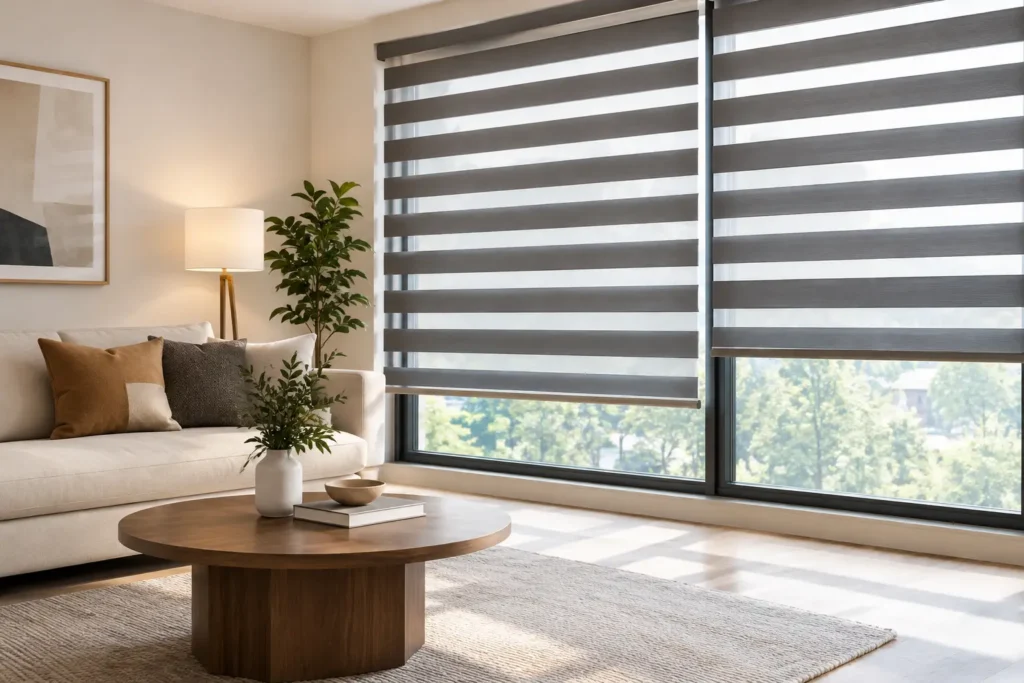
A wall of glass can make a Los Angeles living room feel open and bright, but it can also create glare on the television, heat near the sofa, and a lack of privacy after sunset. Zebra shades for modern interiors solve that design challenge without adding visual weight to the window. Their clean, horizontal bands give homeowners precise control over light while preserving the simple, tailored look that modern spaces need.
Also called dual or transitional shades, zebra shades are made with alternating sheer and opaque fabric panels. As the shade moves, those bands align or overlap. That small shift changes the room from softly filtered daylight to greater privacy, often without the bulky appearance of traditional blinds or heavy drapery.
For homeowners updating a condo, a family room, a home office, or a newly remodeled kitchen, the appeal is straightforward: one custom shade can handle changing light conditions and support a polished, uncluttered design.
Why Zebra Shades Suit Modern Interiors
Modern interiors tend to rely on intentional lines, edited color palettes, and materials that feel considered rather than decorative. Zebra shades fit naturally because their banded construction creates order at the window. When raised, they stack neatly near the top. When lowered, they create a smooth, architectural surface instead of a series of individual slats.
The sheer sections are what make this style especially useful in bright Southern California homes. During the day, homeowners can align the sheer bands to soften direct sun while keeping a connection to the view outside. That matters in rooms with large windows, sliding doors, or an east- and west-facing exposure where sunlight changes quickly.
At night, aligning the solid fabric bands provides more coverage. It is not identical to the complete darkness of a dedicated blackout shade, but it offers meaningful privacy for many living spaces. For bedrooms, media rooms, or rooms with strong exterior lighting, a room-darkening or blackout fabric option may be the better choice.
The look is minimal, but the function is flexible
A modern room should not force you to choose between daylight and privacy for the entire day. Zebra shades let you fine-tune both. Open the sheer bands for diffused light during breakfast, close the opaque bands when afternoon glare hits, or raise the treatment fully when you want an unobstructed window.
That flexibility is a major reason they work well in open-concept homes. A single space may serve as a dining room, work area, and family gathering spot. Adjustable light control helps each area remain comfortable without changing the room’s overall appearance.
Choosing the Right Fabric, Color, and Opacity
The best zebra shade is not simply the one that looks good on a sample card. The right choice depends on the room’s exposure, surrounding finishes, privacy needs, and how the space is used after dark. Seeing fabrics inside the home is useful because sunlight can make a soft gray look cooler, warmer, lighter, or darker than expected.
Neutral shades remain a reliable choice for modern homes. White, ivory, light gray, greige, charcoal, and black can work beautifully, but they create different effects. A lighter fabric keeps the window treatment subtle and airy. A deeper tone can frame a large window and add definition, especially in rooms with pale walls and minimal furnishings.
Texture deserves attention, too. Smooth fabrics feel crisp and contemporary, while linen-like weaves introduce softness without becoming formal. In a home with warm oak floors, matte black hardware, and off-white walls, a warm neutral woven fabric can bridge those elements. In a sleek office with glass partitions and metal finishes, a clean white or gray fabric may be more appropriate.
Opacity should be selected with equal care. Sheer portions can reduce harsh daylight, but they do not eliminate visibility into a room at night when interior lights are on. If privacy is the primary concern, discuss denser materials, room-darkening options, or layering with drapery panels. There is no single best answer – the right balance depends on the room and the homeowner’s priorities.
Where Zebra Shades Work Best
Zebra shades are versatile, but some windows benefit from them more than others. They are particularly effective in living rooms, dining rooms, kitchens, offices, and primary bedrooms where light needs change throughout the day. They can also create a consistent visual treatment across multiple windows, which helps larger homes and open floor plans feel organized.
For sliding glass doors, the decision needs more consideration. A zebra shade can be a great fit when the door configuration, available mounting space, and traffic pattern support it. In other cases, a vertical treatment or a panel-track solution may operate more comfortably. The key is to evaluate how often the door is used, not just how it looks from across the room.
Bathrooms and laundry rooms may require moisture-conscious material choices. Likewise, a room with intense afternoon sun may call for a fabric that prioritizes solar control over maximum openness. A custom consultation helps identify these practical differences before a product is ordered.
Motorization adds everyday convenience
Motorized zebra shades make sense in rooms with tall windows, hard-to-reach glass, or multiple shades operating together. With the touch of a button, homeowners can lower shades during the hottest part of the day, create privacy in the evening, or open them in the morning without walking from window to window.
Motorization is not only about convenience. It can make light control more consistent, especially in spaces where shades are otherwise left untouched because the windows are inconvenient to reach. For a clean modern aesthetic, cordless and motorized operation also reduces visible controls and keeps the window area looking refined.
Custom Measuring Makes the Difference
Modern window treatments depend on clean proportions. A shade that is slightly too narrow, mounted too low, or poorly aligned can stand out for the wrong reasons. Custom measurement accounts for the exact width, height, window depth, trim, handles, and surrounding architecture so the finished treatment looks intentional.
Inside mounts create a recessed, built-in appearance when the window frame has sufficient depth. Outside mounts can make a window appear larger, cover shallow frames, and improve light coverage around the edges. Neither option is automatically better. The right installation style is based on the window itself and the look you want to achieve.
Professional installation also matters for smooth operation. Zebra shade bands need to align properly, and brackets must be secured in the correct positions. This is particularly valuable for wide windows, grouped treatments, or motorized systems where precise setup affects both appearance and performance.
Blinds by Design brings the selection process into the space where the shades will be used. During an in-home consultation, you can compare colors and fabrics against your walls, flooring, furnishings, and natural light, then receive expert guidance on custom sizing and installation. That approach avoids the guesswork that often comes with ordering window coverings from a screen.
A Few Design Details Worth Planning Early
Before selecting a shade, consider what sits near the window. A deep window sill, nearby furniture, a sliding door handle, or crown molding can influence the best mounting method. If you are remodeling, it is also helpful to choose window treatments before finalizing paint and furniture so the palette works together rather than becoming an afterthought.
Consistency matters, but every room does not need identical fabric. You might use the same color family throughout the home while choosing a room-darkening material for bedrooms and a more open weave in shared living areas. The goal is a coordinated result that respects how each room is actually used.
For office settings, zebra shades can offer a similarly polished solution. They reduce visual distractions and soften screen glare while maintaining a professional appearance. When several windows face the same exposure, coordinated operation and matching fabrics can make the whole space feel more deliberate.
The strongest window treatments do more than cover glass. They shape how a room feels from morning through evening. A well-chosen zebra shade brings control, privacy, and a finished modern look to the same window, leaving the rest of the room free to do what it was designed to do.