
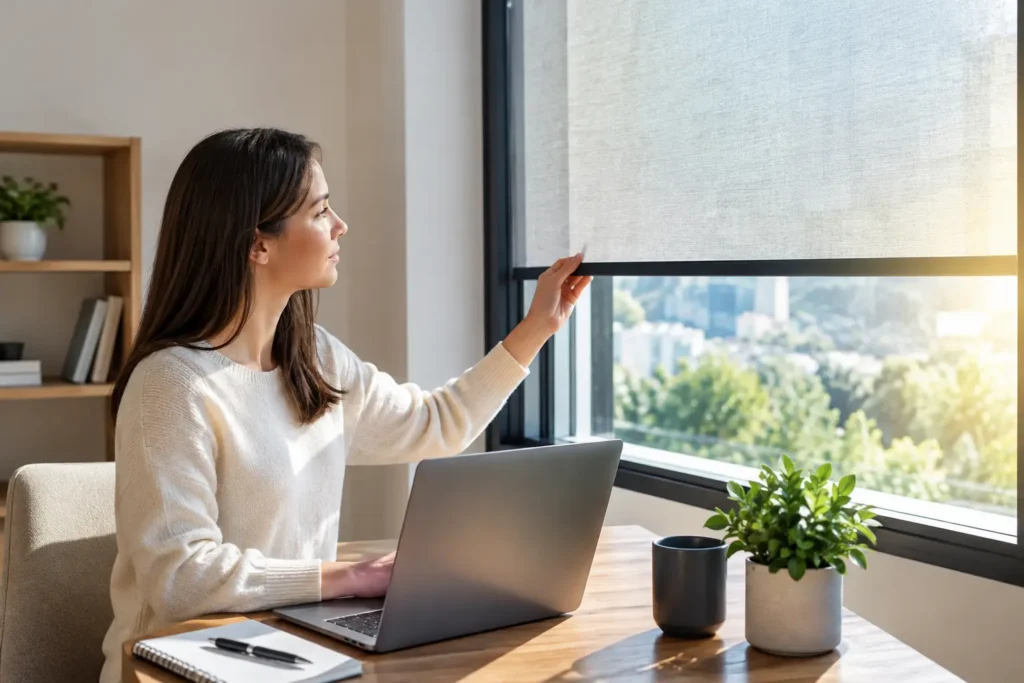
A bright Los Angeles afternoon can make a beautiful room difficult to use. Sun reflecting off a TV, computer monitor, countertop, or polished floor creates eye strain and heat without necessarily giving you the comfortable natural light you want. The right way to reduce glare with shades is not simply choosing the darkest fabric. It is choosing a custom treatment that filters, directs, or blocks sunlight based on how each room is used.
For homeowners and office decision-makers, glare control works best when it is planned around the window, the direction of the sun, and the activities happening nearby. A shade that looks great in a showroom may perform very differently in a west-facing family room or an office with screens near large glass doors. Custom guidance and accurate measuring help turn window coverings into a practical part of daily comfort.
Why glare is more than a brightness problem
Glare occurs when sunlight is much brighter than the surrounding area, making it harder for your eyes to adjust. It can wash out a television image, leave a bright reflection across a laptop screen, or make a dining room feel uncomfortable during certain hours of the day. In Southern California, direct sun can also add unwanted heat, which puts more demand on your cooling system.
The goal is usually not to eliminate daylight altogether. Natural light can make a room feel open, show off interior finishes, and reduce the need for artificial lighting. The better approach is to soften harsh light while preserving the view, privacy, and overall look of the space where possible.
That balance depends on several details: window orientation, glass size, nearby buildings or trees, interior colors, and whether the room needs daytime privacy. A bedroom may need a near-blackout solution, while a kitchen or office may benefit from filtered light that keeps the room usable without closing it off.
How to reduce glare with shades by room
Start with what happens in the room during the brightest part of the day. This is more useful than choosing a shade based on color alone.
In a living room, television viewing and afternoon comfort are often the priorities. A solar shade can reduce strong glare while maintaining an outward view during daylight hours. If the room is used for movie nights or has intense late-day sun, pairing a solar shade with a secondary drapery panel or choosing a room-darkening roller shade may offer more control.
Home offices need special attention because screen glare affects concentration. A shade with a moderate openness factor can filter sunlight without making the workspace feel dim. For windows directly behind or beside a monitor, a more opaque fabric or dual-shade setup may be the better choice. Positioning the workstation can help as well, but window treatment control is often the most reliable solution when furniture placement is limited.
Bedrooms call for privacy and sleep-friendly darkness. Room-darkening or blackout shades are common choices, especially for east-facing windows that bring in early morning light. Keep in mind that fabric labeled blackout reduces light through the material, but light can still enter around the edges of an inside-mounted shade. For the best results, a custom fit, outside mount, side channels, or layered treatment may be appropriate.
In kitchens and dining areas, homeowners often want glare reduction without losing a bright, welcoming feeling. Light-filtering roller shades, woven shades with liners, or adjustable sheer shades can soften sun on countertops and tables while keeping the room visually warm.
Choose the right shade fabric and opacity
Fabric openness is one of the most important factors in glare control, particularly with solar shades. Openness refers to the amount of space in the weave. A lower openness percentage has a tighter weave and blocks more glare, UV exposure, and heat. A higher percentage allows more light and a clearer view outward, but it provides less control against harsh sun.
A 1% to 3% openness fabric is often a strong choice for rooms with serious glare or sun exposure. It offers more filtering while still allowing some connection to the outdoors. A 5% openness fabric provides a lighter look and more visibility, which can work well in spaces with softer sun or where preserving the view is the priority. There is no single best percentage. The right option depends on which direction the window faces and how much glare you experience at different times.
Color also matters. Darker solar shade fabrics often provide better outward visibility during the day because they reduce reflected light inside the room. Lighter fabrics can blend beautifully with a light interior and may reflect more solar heat, but the view through the shade can appear less defined. Looking at samples inside your actual space is the simplest way to see the difference.
Consider shade styles that give you more control
Roller shades are a popular choice for glare control because they have a clean profile and are available in solar, light-filtering, room-darkening, and blackout materials. They work well in modern homes, offices, and rooms with wide windows. Their straightforward operation also makes them a good candidate for motorization.
Solar shades are specifically designed to filter sunlight, reduce glare, and help protect furnishings from UV exposure. They are especially useful on large windows, sliding doors, and view-facing windows where traditional blackout coverage would feel too heavy during the day. At night, however, solar shades do not provide the same privacy as opaque shades when interior lights are on. A second layer may be needed in private rooms.
Cellular shades offer a different advantage: insulation. Their honeycomb-shaped construction can help reduce heat transfer while providing light filtering or room darkening, depending on the fabric selected. They are a practical option for bedrooms, nurseries, and rooms that get hot in the afternoon.
Dual shades, sometimes called zebra or banded shades, use alternating sheer and opaque bands to adjust light levels. They can be a flexible choice when you want to move between filtered daylight and privacy without adding a separate treatment. Their exact glare performance varies by fabric, so seeing samples in person is worthwhile.
Fit and installation affect glare control
Even a high-quality shade can underperform if it is measured or mounted incorrectly. Gaps around the edges can allow sharp beams of light into the room, particularly when the sun sits at a low angle. This may not matter for a casual living space, but it can be frustrating in a bedroom, media room, or office.
Inside-mounted shades sit within the window frame and create a streamlined appearance. They require enough frame depth and leave small light gaps on the sides. Outside-mounted shades overlap the window opening, which can improve coverage and is often useful for room-darkening needs. The best mounting option depends on trim, window depth, door clearance, and the level of light control you need.
Professional measuring also matters on wide windows, bay windows, sliding doors, and windows with uneven frames. A custom fit helps the treatment operate smoothly and look intentional, rather than becoming another adjustment on your to-do list.
Motorization makes glare management easier
Glare is often predictable. East-facing windows get strong morning sun, while west-facing rooms can become difficult in the late afternoon. Motorized shades allow you to schedule treatments to lower during those periods and raise again when the light becomes comfortable.
This is especially helpful for hard-to-reach windows, multi-window walls, and offices where employees should not have to interrupt their work to adjust coverings throughout the day. Motorization can be controlled by a remote, wall switch, app, or smart-home system, depending on the product. It adds cost, but for frequently used or high windows, the everyday convenience can justify the investment.
Get a solution designed for your actual light
The best glare solution is rarely selected from a photo alone. Viewing fabrics against your window, wall color, flooring, and outdoor exposure gives you a clearer sense of how the treatment will perform. It also helps identify trade-offs before installation, such as choosing stronger sun filtering versus a clearer view, or blackout coverage versus a more minimal look.
Blinds by Design helps Los Angeles and Orange County homeowners and offices compare custom shade options through an in-home consultation, detailed measurement, and professional installation. A specialist can assess where the glare enters, when it is strongest, and which shade style supports your privacy, design, and budget goals.
If sunlight is making a room harder to enjoy, schedule a free consultation and test the options where they matter most: at your own windows, at the time of day you use the space.