
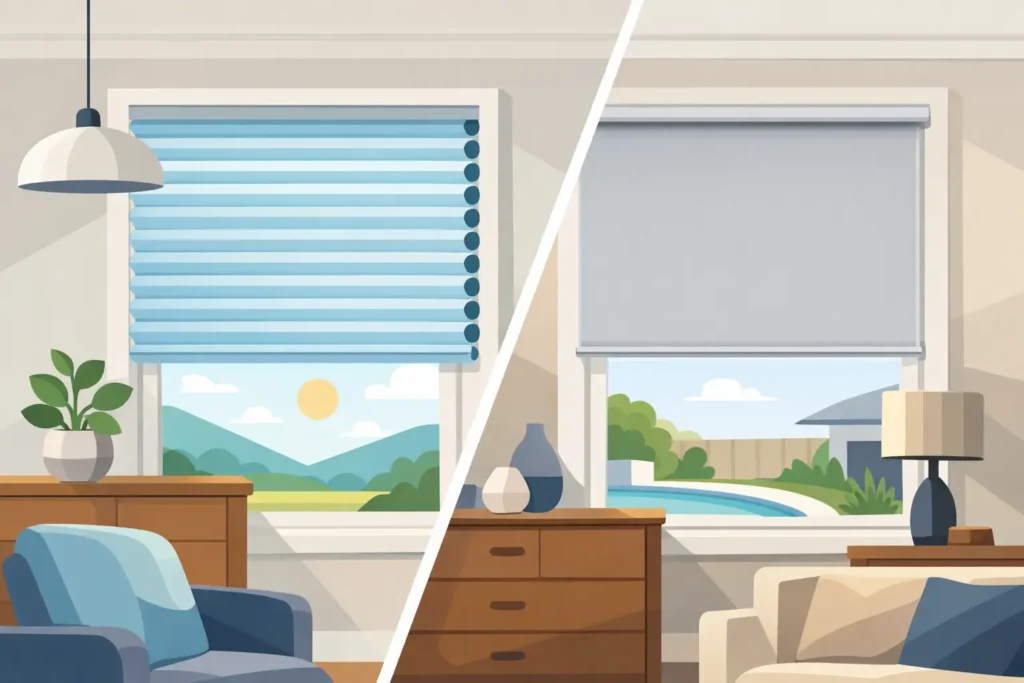
A west-facing living room in Los Angeles can feel comfortable at breakfast and uncomfortably bright by midafternoon. The right shade does more than finish the window – it helps manage heat, glare, privacy, and the look of the room. When comparing cellular shades versus roller shades, the better choice depends on what you need the window treatment to do every day.
Both are clean, versatile shade styles that work well in homes, apartments, and offices. They can be custom sized, offered with cordless or motorized operation, and tailored for light filtering or room darkening. Their core differences come down to construction: cellular shades are designed around energy efficiency and softness, while roller shades deliver a flatter, more minimal profile.
Cellular Shades Versus Roller Shades: The Main Difference
Cellular shades, also called honeycomb shades, are made with pleated fabric that forms air pockets when viewed from the side. Those pockets create an insulating layer between the window glass and the room. Roller shades use a single flat panel of fabric that rolls neatly around a tube at the top of the window.
That design difference matters most in rooms with strong sun exposure, older windows, or a need for more temperature control. Cellular shades can help reduce heat gain during Southern California afternoons and limit heat loss on cooler nights. Roller shades still soften sunlight and can block a great deal of heat when paired with the right solar or blackout fabric, but they do not provide the same insulating structure.
For many homeowners, this is not an either-or decision for the entire house. A bedroom, nursery, or sun-facing family room may benefit from cellular shades, while a sleek kitchen, office, or contemporary living space may look best with roller shades.
When Cellular Shades Are the Better Fit
Cellular shades are a strong choice when comfort and privacy rank ahead of a sharp, minimalist look. Their pleated structure adds visual softness without the fullness of drapery, making them suitable for traditional, transitional, and contemporary interiors.
Better insulation at the window
Windows are often the weakest point in a room’s thermal envelope. A custom cellular shade helps create a buffer at the glass, which can make areas near large windows feel less exposed to outdoor heat. This is particularly useful in rooms with afternoon sun, upstairs bedrooms, and spaces where the air conditioning seems to work harder than it should.
Single-cell shades provide a lighter profile and dependable insulation. Double-cell shades add another layer of air pockets for stronger insulation, though they have a slightly more substantial appearance. During an in-home consultation, seeing both against your actual window and wall color makes the choice easier.
Flexible light control and privacy
Cellular shades are available in sheer, light-filtering, and blackout fabrics. Light-filtering options soften direct sun while maintaining a bright, welcoming feel. Blackout cellular shades are often selected for bedrooms, media rooms, and nurseries where sleep and glare control matter.
Top-down/bottom-up operation is another practical advantage. It lets you lower the shade from the top for daylight while keeping the lower portion of the window covered for privacy. For homes close to neighboring properties or street traffic, that flexibility can be more useful than a standard shade that only lifts from the bottom.
A softer look for everyday spaces
Because cellular shades have gentle horizontal pleats, they bring texture to a window without becoming a dominant design feature. They work especially well when the goal is a calm, coordinated room rather than a dramatic focal point. They are also a practical option for odd-sized windows because a professional measurement ensures the pleats hang evenly and operate correctly.
There are trade-offs. Cellular fabrics can collect dust in their pleats and are generally best maintained with light vacuuming or a gentle blower attachment. They also do not offer the wide selection of printed patterns and highly open solar fabrics available with roller shades.
When Roller Shades Make More Sense
Roller shades are defined by their simplicity. When raised, they disappear into a compact roll at the top of the window. When lowered, they create a smooth, uncluttered plane of fabric. That straightforward look works naturally in modern homes, remodeled kitchens, offices, and rooms where you want the view and architecture to take center stage.
A clean, tailored appearance
Roller shades come in an extensive range of fabrics, colors, textures, and openness levels. A neutral woven fabric can add warmth without looking busy. A bold color or subtle pattern can turn the treatment into a deliberate design element. Decorative valances, cassette headrails, and exposed roll options allow the final look to be as streamlined or finished as the room requires.
For wide windows and sliding glass doors, roller shades can offer a particularly clean solution. Their flat fabric panel avoids the stacked, pleated look some homeowners prefer to minimize in a contemporary setting.
Excellent glare management and view options
Solar roller shades are popular in Los Angeles homes with expansive windows because they reduce glare and filter intense sunlight while preserving an outward view during the day. The fabric’s openness percentage affects that balance. A lower openness fabric provides greater privacy and sun control but a less defined view; a higher openness fabric keeps more of the view while allowing more light through.
For bedrooms and rooms that need more complete darkness, blackout roller fabric is the better choice. Keep in mind that a shade mounted inside the window opening will usually leave small light gaps along the sides. An outside mount can improve coverage, and details such as a cassette or side channels may be worth discussing when room darkening is the priority.
Easy operation and straightforward care
Roller shades have fewer visible folds and are easy to maintain with occasional dusting or a light wipe, depending on the fabric. They are also well suited to motorization. With the touch of a button or a scheduled setting, motorized roller shades can lower before afternoon glare becomes disruptive and raise when you want natural light back in the room.
The trade-off is insulation. Even an excellent roller shade fabric does not create the same air-trapping pockets as a cellular shade. If a room runs hot or cold because of large, exposed glass, roller shades may need to be paired with other strategies, such as layered drapery or solar-control window film, to achieve the same comfort level.
How to Choose for Each Room
The most useful question is not which style is best overall. It is what problem the shade needs to solve in that room.
Choose cellular shades when insulation, privacy, soft filtered light, or flexible top-down/bottom-up control is the priority. They are often a comfortable fit for bedrooms, nurseries, family rooms, and windows that receive persistent direct sun.
Choose roller shades when you want a crisp architectural look, easy fabric care, a broad range of textures, or a daytime view through solar fabric. They are a natural choice for living rooms with a view, kitchens, home offices, and commercial spaces where glare on screens needs to be controlled.
For bedrooms, either style can work well with blackout materials. Cellular shades may provide a more insulated feel, while roller shades offer a cleaner profile and broader decorative fabric selection. For bathrooms, fabric choice and ventilation matter more than the shade category alone. For offices, solar roller shades are often effective for screen glare, while cellular shades may be preferred in rooms that become too warm near the windows.
Why Custom Measurement Changes the Result
A well-chosen shade can still look unfinished or perform poorly if it is not measured and installed correctly. Inside mounts require sufficient window depth and precise measurements. Outside mounts need enough overlap to improve privacy and light control. Window handles, molding, door clearance, and furniture placement all affect the right product and mounting plan.
That is why a home consultation is valuable. Rather than selecting from a small swatch under store lighting, you can compare fabrics, opacity levels, colors, and operating options against your flooring, paint, furnishings, and natural light. Blinds by Design brings that process to your home, then handles custom measurement and professional installation so the final treatment fits the room as intended.
A shade should make a room easier to live in, not give you another compromise to manage. Start with the sunlight, privacy, and style you want at each window, then let the right custom solution do its work quietly every day.