
A west-facing living room can be comfortable at breakfast and nearly unlivable by late afternoon. If you are wondering how to automate window shades, the goal is not simply to add a remote control. It is to make light, privacy, and indoor comfort easier to manage around the way your household or office actually operates.
Automated shades can lower before direct sun heats a room, close at night without walking from window to window, and raise on a schedule to welcome daylight in the morning. For Los Angeles and Orange County properties, where bright sun is a daily consideration, automation can also help protect furnishings, flooring, and artwork from repeated UV exposure.
The best system starts with the right shade style, power source, and control method. Custom measurement and professional installation matter because even an excellent motor will not solve gaps, uneven operation, or a shade that does not suit the window.
How to Automate Window Shades: Start With the Room
Before choosing a motor or an app, consider what each room needs. A bedroom may need room-darkening fabric and a quiet motor that can close on a nighttime schedule. In a family room, solar shades may be the better fit because they soften glare and preserve part of the view. An office may benefit from shades that adjust during presentations or close automatically during the hottest part of the day.
This is also where fabric openness, color, and mounting style become part of the decision. A darker solar fabric can improve outward visibility during daylight, while a lighter fabric may better support a bright, airy design. Roller shades, Roman shades, cellular shades, and woven wood shades can all be motorized, but their appearance and light-control performance differ.
For large windows, patio doors, or several windows in one room, think about how the shades should move together. You may want one control for the entire wall of glass, with the option to operate individual shades when needed. Planning these groupings early prevents a collection of controls that feels inconvenient rather than helpful.
Choose the Right Power Option
Motorized shades are commonly powered by batteries, plug-in power, or hardwired electrical connections. Each option has a place, and the right choice depends on the number of shades, window access, and whether the space is new construction or an existing home.
Battery-powered shades are often a practical choice for existing rooms because no nearby outlet or electrical work is required. They keep the installation clean and are especially useful for individual windows. The trade-off is battery replacement or recharging. Frequency varies based on shade size, use, motor type, and battery system, but it is a maintenance item to expect.
Plug-in shades work well when an outlet is close to the window and the cord can be routed discreetly. This option avoids battery changes, though it is not ideal for every layout. Visible cords and limited outlet placement can affect both the finished appearance and the installation plan.
Hardwired automation is often preferred during a remodel or new build. It offers a polished long-term solution for homes with many motorized shades, but it requires coordination with an electrician before drywall is closed. It can be worth the advance planning when the project includes whole-home controls or numerous hard-to-reach windows.
Solar charging accessories may be available for certain shade systems. They can reduce the need for battery service in sunny locations, although window orientation, available sunlight, and the desired look at the window should be evaluated first.
Select Controls That Feel Easy to Use
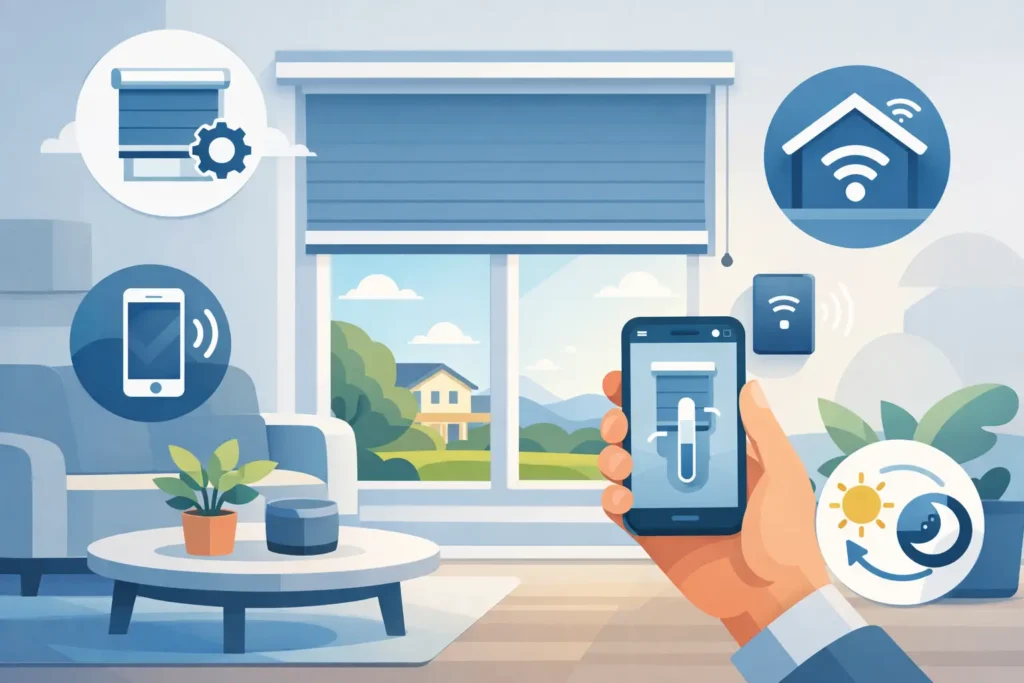
Automation should simplify daily routines, not add another system that no one wants to learn. Most motorized shade systems can be operated with a handheld remote, wall-mounted control, smartphone app, voice assistant, or a combination of these options.
A remote remains a reliable, straightforward choice for many homeowners. It is particularly useful for guests, children, or anyone who prefers a physical button over an app. Multi-channel remotes can control one shade, a group of shades, or an entire room.
App-based control gives you more flexibility. You can open or close shades while away, create schedules, and often set scenes such as “morning,” “movie time,” or “away.” Voice control can be convenient in kitchens, bedrooms, and rooms with high windows, but it works best as an added option rather than the only way to operate your shades.
For a connected home, ask whether the motorized shade system is compatible with the smart-home platform you already use. Compatibility matters more than having every possible feature. A dependable system with controls your household will actually use is usually the better investment.
Use Schedules and Scenes for Daily Comfort
The real value of automated shades becomes clear when they operate on a routine. Rather than reaching for a remote whenever the sun shifts, you can program the shades to respond to the time of day.
A simple weekday schedule might raise bedroom shades in the morning, lower south- or west-facing shades before afternoon glare, and close street-facing shades at sunset for privacy. In an office, a scene can lower display-facing shades before a meeting and return them afterward.
Some systems also use sun sensors or location-based timing. These features can be useful, but they need thoughtful setup. A schedule that closes a shade too early may make a room feel unnecessarily dark. A sensor may react differently depending on landscaping, neighboring structures, or seasonal sun angles. Start with a few practical schedules, live with them for a week or two, and adjust from there.
Do Not Overlook Shade Construction and Installation
A motor is only one part of an automated shade. The shade must be properly sized, balanced, and mounted so it travels evenly and rests where it should. This is especially significant for wide shades, taller windows, and treatments installed near doors or architectural trim.
Inside mounts provide a clean, built-in look when the window frame has sufficient depth and square dimensions. Outside mounts can cover more of the window opening, reduce side light gaps, and solve challenges created by shallow frames. The right choice is based on the window itself, the desired privacy level, and the overall design of the room.
Professional measurement is also valuable when multiple shades need to align across a wall. Small inconsistencies are more noticeable once shades are grouped and operated together. A custom-fit solution helps ensure that the motorization enhances the room instead of calling attention to uneven details.
Plan for Privacy, Light, and Safety Together
Automated shades are an excellent option for high or difficult-to-reach windows, but they also make everyday spaces safer and more comfortable. Cordless motorized operation eliminates dangling lift cords, which can be a consideration for homes with young children and pets.
Privacy needs can change by room and time of day. A sheer or solar shade may be perfect during daylight, yet it may not provide the nighttime privacy needed for a bedroom or street-level living area. In those cases, dual shades or layered window treatments can offer greater control. For example, a solar shade can manage glare during the day while a room-darkening shade provides privacy in the evening.
Consider the window’s exposure as well. East-facing rooms receive early sun, west-facing rooms often deal with intense afternoon heat, and large south-facing glass can need consistent daytime glare control. The same motorized shade is not necessarily the right answer for every window in the house.
Get Expert Help Before Ordering
Motorized window treatments involve more choices than fabric and color. The power source, control system, mounting method, shade weight, window dimensions, and intended routine all affect the final result. Seeing samples in the actual room also makes it easier to judge color, texture, and light filtering under your home’s natural light.
Blinds by Design brings the consultation and selection process to your home or office, helping you compare custom options where they will be installed. With professional measurement and installation, you can choose an automated shade system that looks intentional, operates reliably, and supports the way you use your space.
If you are planning a remodel, address motorized shades early enough to consider hardwired power and control locations. If you are updating an existing room, battery or plug-in options may deliver the convenience you want with less disruption. A free in-home consultation is a practical next step for turning an idea into a window treatment plan that feels right every day.