
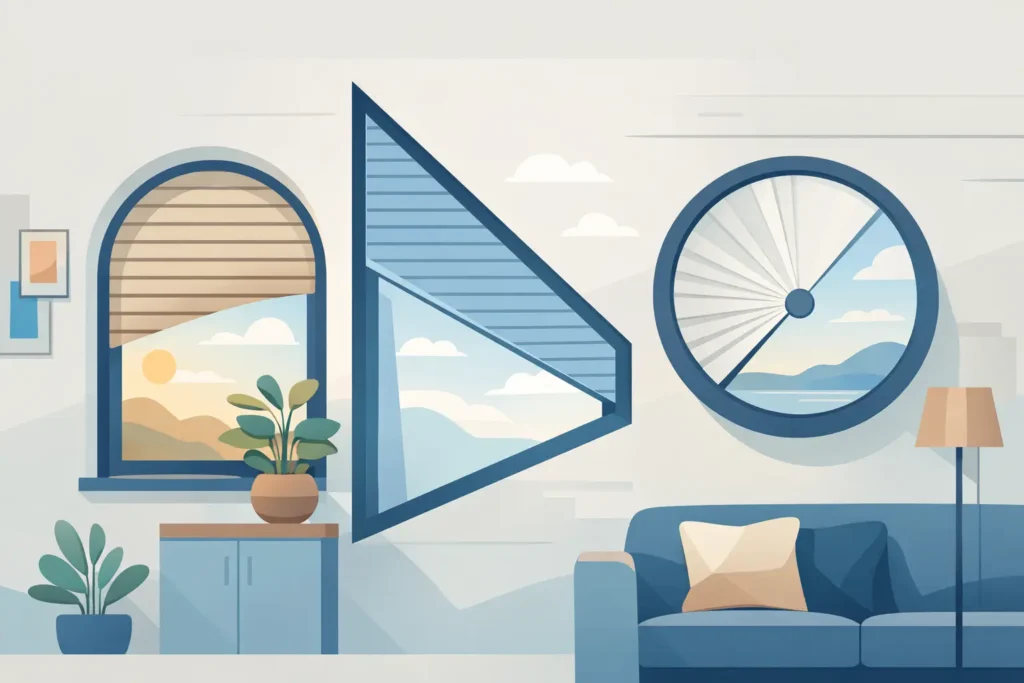
A dramatic arched window, a deep bay, or a narrow angled pane can make a room memorable. It can also make choosing window coverings frustrating when standard sizes leave gaps, bunch at the edges, or hide the feature you wanted to highlight. Custom blinds for odd windows solve that problem by treating the window as part of the design, not an obstacle to work around.
For homeowners and office decision-makers in Los Angeles and Orange County, the right solution comes down to more than finding a covering that physically fits. You need the right balance of privacy, sunlight control, insulation, operation, and style. That starts with precise measuring and a clear look at how the window is used throughout the day.
Why unusual windows need a custom approach
Oddly shaped windows are rarely truly standard, even when they look similar to a familiar style. An arch may have a subtle curve that changes from one side to the other. A bay window may include different depths at each panel. Older homes can have frames that are slightly out of square, while newer homes may feature tall transoms, trapezoids, or clerestory windows designed primarily for architectural impact.
Ready-made blinds are built around common width and height ranges. They may cover part of an unusual opening, but they often create light gaps, awkward overlaps, or a crowded appearance. For windows near bedrooms, bathrooms, neighboring homes, or street-facing spaces, those gaps can affect privacy as much as appearance.
A custom solution accounts for the exact dimensions of the opening, the mounting surface, the window depth, and any hardware that could interfere with operation. It also considers practical details that are easy to overlook, such as whether a casement window needs clearance to open or whether a treatment will be within reach on a tall wall.
Custom blinds for odd windows start with the window’s purpose
Before choosing a material or color, consider what the window needs to do. The same shape can call for very different treatments depending on its location.
A high arched window in a living room may need soft filtered light while preserving the arch itself. A triangular bedroom window may need room darkening and privacy. A large angled window exposed to afternoon sun may benefit most from solar control that reduces glare and helps protect floors and furnishings from fading.
This is why there is no single best covering for every unusual window. Fixed treatments can be a smart choice for windows that are decorative or difficult to reach. Operable shades or blinds are better when you need to adjust light and privacy daily. In some cases, combining treatments offers the best result: a custom-shaped shade for the upper portion and a separate treatment below for everyday use.
Arched and half-round windows
Arches are among the most requested specialty window shapes. They can be covered with custom cellular shades, specialty shutters, or shaped treatments designed to follow the curve. The decision often comes down to whether you want the covering to remain stationary or move.
A stationary treatment preserves a clean, tailored look and works well for high arches where light control is not frequently needed. If the window receives strong direct sun, an operable option may be worth the added investment. Shutters can create a classic, architectural finish, while cellular shades provide a softer appearance and can offer added insulation.
Angled, triangular, and trapezoid windows
These windows are common in vaulted rooms, stairwells, and contemporary additions. Their sharp lines make precise fabrication especially important. A treatment that is even slightly off can look noticeably uneven against the frame.
Custom cellular shades are often a practical option because they can be made for many angled configurations and help manage heat gain. Specialty shutters can also suit select shapes, especially when the window is a central design feature. For high or hard-to-reach locations, motorization or a fixed treatment can prevent the window from becoming a daily inconvenience.
Bay, bow, and corner windows
Bay and bow windows create depth, natural light, and a beautiful focal point, but they require careful planning. Each section may need its own blind or shade, and the spacing between treatments matters. Too much overlap can feel bulky. Too much space between panels can let in unwanted light and reduce privacy.
The best approach depends on the window’s angles, projection, and how often each panel opens. Wood or faux wood blinds can provide crisp light control. Roman shades add softness and warmth. Cellular or roller shades offer a streamlined option for a cleaner, more modern room. Accurate in-home measuring helps ensure that handles, trim, and seat areas are considered before anything is ordered.
Tall, narrow, and transom windows
Tall narrow windows can be difficult because conventional blinds may look visually heavy or leave limited room for mounting. Transoms pose a different challenge: they are often placed above doors or larger windows, where access is limited and a covering must complement the treatment below.
For these areas, a simple shade in the right opacity can make the window feel intentional without drawing attention away from the rest of the room. If the transom is only there for light, a stationary custom shade may be all that is needed. If it faces a nearby property or receives harsh sun, a treatment with privacy or solar-filtering benefits may make more sense.
Choosing materials for light, privacy, and style
The material should support how the room is used, not just match a photo. Faux wood blinds are durable and well suited to spaces where moisture or frequent cleaning is a concern. Wood blinds bring natural warmth but may not be ideal for every high-humidity setting. Cellular shades are valued for their clean profile and insulating structure, while roller and solar shades suit clients who want a minimal look and controlled views.
For bedrooms and media rooms, consider room-darkening or blackout fabrics. These can significantly reduce light, though side gaps may still allow some brightness depending on the window shape and mounting method. For living areas, light-filtering fabrics can soften intense Southern California sun without making the room feel closed off.
Color also matters more on irregular windows. A treatment that closely relates to the wall color can reduce visual clutter around a complex shape. A contrasting color, wood tone, or shutter finish can turn the window into a deliberate focal point. Neither approach is automatically better. It depends on whether the architecture should blend into the room or stand out.
Motorization can make difficult windows easier to use
A beautiful window treatment is less valuable if it is too inconvenient to operate. High windows, windows behind furniture, and large multi-panel arrangements are strong candidates for motorized shades or blinds. With remote, wall-control, or smart-home options, you can adjust light without climbing, stretching, or moving furniture.
Motorization is especially useful where sunlight changes throughout the day. In a west-facing room, scheduled adjustments can help reduce late-afternoon glare. In an office, they can make screen work more comfortable while maintaining a polished appearance. It does add to the upfront cost, so it is most worthwhile for windows that are frequently adjusted or genuinely hard to reach.
Why professional measuring and installation matter
Specialty windows leave little room for guesswork. Measurements must account for more than width and height. A professional checks the shape, the level of the mounting surface, trim depth, obstruction points, window operation, and the available space for brackets or hardware.
Installation is equally important. A properly fitted treatment should operate smoothly, sit evenly, and look aligned with the architecture. That is particularly noticeable with arches, angled openings, and bay windows, where a minor installation error can disrupt the entire visual effect.
At Blinds by Design, the process begins with a free in-home consultation, so you can compare materials, colors, and operating options in the actual light of your home or office. With more than 23 years of experience, our team helps clients move from an unusual window shape to a finished treatment that feels considered, functional, and made for the space.
The best next step is not to force an off-the-shelf product to behave like a custom one. Schedule a consultation, let the window be measured properly, and choose a treatment that makes its distinctive shape feel like one of the room’s strengths.