
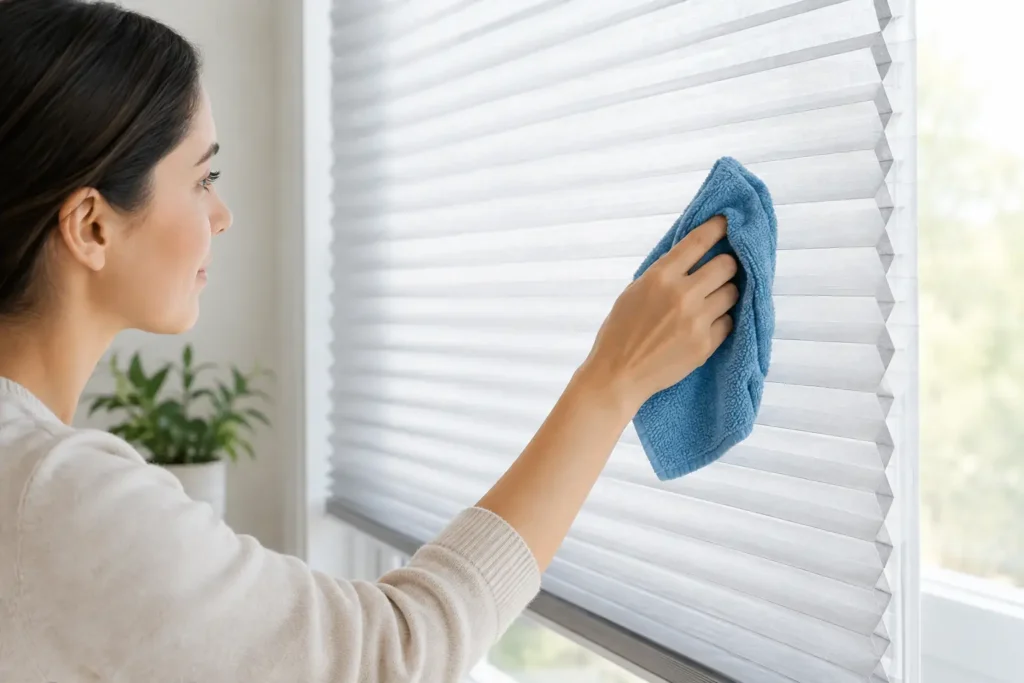
Cellular shades do more than soften a room. Their honeycomb-shaped pockets help manage light, privacy, and insulation, which is especially welcome during warm Los Angeles afternoons. Knowing how to clean cellular shades properly protects those delicate cells, preserves the fabric’s appearance, and helps your custom window treatments continue operating smoothly.
The good news is that most cellular shades need only gentle, regular attention. The wrong approach, however, can crush pleats, push dust deeper into the cells, leave water marks, or affect the shade’s structure. Start with the least aggressive method, then move up only if the stain or buildup calls for it.
Why Cellular Shades Need a Gentle Cleaning Method
Unlike flat roller shades or hard blinds, cellular shades are made with layered fabric that creates small air pockets. Those pockets are what give the shade its insulated, energy-conscious design. They can also collect dust, small insects, and debris over time, particularly near open windows, kitchens, and doors.
Many cellular shades are polyester or a similar engineered fabric, but construction and finish vary. Light-filtering, blackout, sheer, cordless, and motorized styles may have different care requirements. Before cleaning, check the manufacturer’s care instructions if you still have them. A cleaning method that is fine for one fabric can be too wet or too abrasive for another.
Avoid soaking the shade, scrubbing firmly, or using harsh household cleaners. Bleach, ammonia, strong degreasers, and alcohol-based products can discolor fabric, weaken adhesives, or leave uneven spots. When in doubt, test any cleaning solution on a hidden section first.
How to Clean Cellular Shades for Routine Dust
For routine care, dry cleaning methods are usually all you need. Plan to dust cellular shades every few weeks, or more often in homes with pets, nearby construction, or frequent open windows. Regular upkeep keeps dust from settling into the honeycomb cells, where it is harder to remove later.
Start with a Feather Duster or Microfiber Cloth
Lower the shade fully so the pleats are extended. Use a clean feather duster, a soft microfiber cloth, or a lambswool duster to gently sweep across the fabric. Work from top to bottom and follow the direction of the pleats rather than rubbing across them.
For day-to-day dust, a microfiber cloth is often the simplest choice. Use very light pressure. The goal is to lift dust from the surface, not press it into the fabric or flatten the pleats.
Use a Vacuum With a Brush Attachment
A vacuum cleaner with a soft brush attachment can remove heavier dust without introducing moisture. Set the vacuum to its lowest suction level, and run the brush gently along the outside surface of the shade. Keep the attachment moving and avoid pulling at the fabric.
Do not insert a vacuum nozzle into the cells. Strong suction can distort the honeycomb shape or damage internal components. Instead, focus on the front and back surfaces, then use a handheld hair dryer on its cool setting to blow loose debris from the cells if needed. Hold it several inches away so the airflow remains gentle.
Clean the Headrail and Hardware Separately
Dust also gathers on the headrail, bottom rail, and mounting brackets. Wipe these hard surfaces with a slightly damp microfiber cloth, taking care not to drip water onto the fabric. For cordless or motorized shades, avoid spraying cleaner near cords, motors, battery wands, or control components.
Treating Small Spots and Stains
A small handprint, food splash, or smudge does not automatically mean the shade needs professional cleaning. Spot cleaning can work well when done carefully and promptly. It is less risky than wetting an entire shade.
First, remove loose dust around the affected area with a dry cloth or soft brush. This prevents dirt from turning into a larger smear once moisture is added. Then mix a small amount of mild dish soap with lukewarm water. The solution should be lightly soapy, not sudsy.
Dip a clean white cloth into the mixture, wring it out thoroughly, and blot the stain with minimal moisture. Do not rub back and forth. Blot from the outside of the stain toward the center to keep it from spreading. Follow with another clean cloth lightly dampened with plain water to remove soap residue, then blot dry.
Give the shade plenty of time to air dry while fully extended. Do not raise it while damp, as moisture can become trapped in the cells and cause odors, water marks, or misshapen pleats. Avoid hair dryers on hot settings, steamers, and direct high heat.
What to Do About Debris Inside the Honeycomb Cells
It is common for small bits of dust or insects to find their way inside the open ends of cellular shades. This is frustrating, but it does not require taking the shade apart.
Lower the shade completely and use a hair dryer on the cool setting to direct a light stream of air through the cells. Start at one side and work across slowly. You may also use a can of compressed air with care, keeping it at a distance and using short bursts. Too much force can damage the fabric or internal cell structure.
If debris remains trapped or you notice a cell has collapsed, it is best to stop rather than force the issue. A window treatment professional can assess whether the shade can be repaired or whether a replacement is the more practical option.
Cleaning Cellular Shades in Kitchens and Busy Rooms
Cellular shades in kitchens, dining areas, children’s rooms, and high-traffic office spaces may collect more than ordinary dust. Grease particles, fingerprints, and airborne residue require more frequent attention, but the cleaning method should remain gentle.
In a kitchen, vacuum or dust the shade regularly before grease has a chance to settle. If a light oily film develops, use the mild soap-and-water spot-cleaning method on a small area at a time. Heavy grease buildup is difficult to remove from pleated fabric without changing its appearance, so professional guidance is often the safer choice.
For homes with children or pets, address marks as soon as possible. Fresh stains are usually easier to lift than set-in stains. Keep cleaning products away from the shade unless they are specifically suited to the fabric, and never use a colored towel that could transfer dye.
Mistakes That Can Shorten the Life of Your Shades
Cellular shades are durable when cared for correctly, but a few common habits can create unnecessary wear. Do not put them in a washing machine, soak them in a bathtub, or use a handheld steam cleaner. Excess water can damage glued seams and leave moisture inside the honeycomb structure.
It is also wise to avoid aggressive scrubbing, stiff brushes, and high-powered vacuum settings. These methods can fray fabric, crease pleats, and pull the shade out of alignment. If your shades are motorized, never spray liquid cleaners around the motor, remote-control components, or charging connection.
Sun exposure can naturally affect any fabric over many years, especially on windows that receive direct afternoon light. Cleaning cannot reverse fading, but regular dusting helps the material look fresher and prevents grime from making discoloration more noticeable.
When Professional Help Makes Sense
Professional help is a smart option when a shade has deep staining, persistent odors, damaged cells, a bent rail, or operating problems. This is especially true for larger custom shades, blackout fabrics, and motorized systems, where a do-it-yourself repair may lead to more costly damage.
For homeowners and offices in Los Angeles and Orange County, Blinds by Design can help evaluate whether an existing cellular shade is a good candidate for repair or whether a new custom option would better serve the space. Proper measuring, fabric selection, and installation all play a role in keeping shades attractive and easy to maintain over time.
A clean cellular shade should still look crisp when raised and lowered, with evenly formed pleats and fabric that feels dry to the touch. A few minutes of gentle care now can protect the comfort, privacy, and polished look you chose it for.