
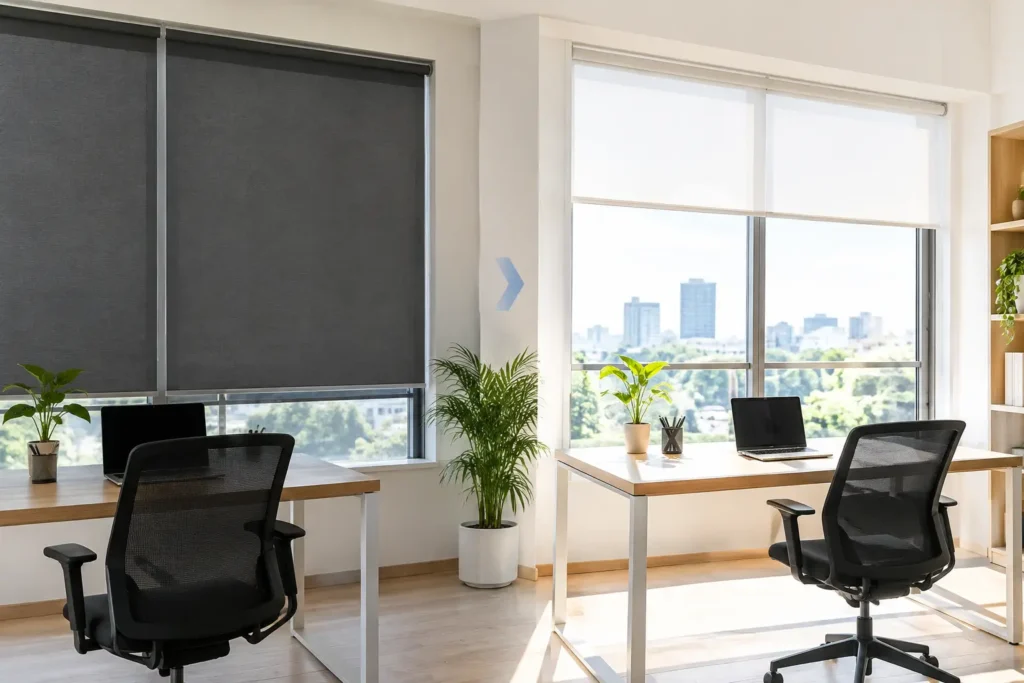
A polished office can still feel unfinished when its windows are working against the room. This office blinds makeover example shows how a dated workspace can gain better glare control, daytime privacy, and a more considered look without turning the project into a complicated remodel.
Picture a small Los Angeles professional office with street-facing windows, aging white vertical blinds, and bright afternoon sun. The blinds still opened and closed, but several vanes were missing, the tracks were noisy, and the uneven coverage made the reception area look neglected. Employees also dealt with screen glare at their desks, while clients in the conference room felt too exposed to the sidewalk outside.
The goal was not simply to replace old blinds. It was to make the office more comfortable for work, more private for meetings, and more consistent with the business’s clean, modern interior.
Office Blinds Makeover Example: The Starting Point
The office had three different window needs within one compact suite. The reception area needed to look welcoming from the moment a client walked in. The conference room needed stronger privacy for conversations and presentations. The open work area needed filtered light that reduced glare without making the space feel closed off.
A one-style-fits-all solution would have been easy, but it would not have served each room equally well. Heavy opaque blinds throughout the office would improve privacy, for example, but could make the reception area darker than necessary. Basic off-the-shelf blinds might cost less initially, but uneven sizing and limited material options would not solve the visual and functional issues that caused the makeover in the first place.
The first step was measuring each window and observing how sunlight moved through the office during the day. In Southern California, direct sun can shift quickly from a pleasant source of natural light to a distraction that overheats a room and washes out computer screens. A good window treatment plan accounts for that daily use, not just how the windows look in a photograph.
The Design Plan: One Office, Three Solutions
For the reception area, the best choice was light-filtering roller shades in a warm neutral fabric. The material softened the intense daylight while preserving an open feeling. From inside, the windows still brought in natural light. From the street, the space looked tidy and professional rather than cluttered with tilted vanes and exposed hardware.
The conference room received dual shades. A light-filtering layer handled daytime glare, while an opaque layer provided privacy for evening meetings, presentations, and sensitive conversations. This was a practical upgrade because the room served more than one purpose. Staff could keep the filtered shade down during the workday, then use the room-darkening option only when the situation called for it.
In the open work area, horizontal faux wood blinds were selected for adjustable light control. Employees could angle the slats to redirect sunlight away from screens rather than blocking the windows completely. Faux wood was also a sensible material choice for a busy office because it offers a tailored appearance, holds up well to regular use, and is easy to maintain.
The finishes were coordinated instead of identical. The shades carried the office’s soft gray and warm white palette, while the faux wood blinds echoed the light oak accents used in the desks and reception counter. That small design decision helped the window treatments look intentional across separate rooms.
Why the Material Choices Mattered
The right material depends on how an office is used. Fabric shades create a softer, more contemporary appearance and work especially well in reception areas, executive offices, and meeting rooms. They are available in varying openness levels, which affects how much light and outside visibility remain.
Blinds offer more precise directional control. They are useful near computer workstations, in offices with changing sun exposure, or where employees prefer to adjust light throughout the day. Shutters can provide a more architectural look and excellent durability, though they are generally better suited to spaces where a permanent, substantial design statement is desired.
There is no single best treatment for every commercial setting. The right answer depends on the window size, sun direction, privacy needs, décor, cleaning requirements, and budget. A professional consultation helps narrow those choices before a business invests in products that look right but do not perform well.
What Changed After Installation
The visual improvement was immediate. The reception area looked calmer and more current because the new roller shades created clean lines from ceiling to sill. The conference room became more useful throughout the day, with fewer reflections on monitors and more control over privacy. In the work area, employees could adjust the faux wood blinds in seconds instead of fighting with bent vertical vanes.
The makeover also improved consistency. Before the project, each window looked slightly different depending on which old vanes were open, damaged, or missing. After installation, the treatments created a unified backdrop for furniture, artwork, and signage. That matters in an office because windows often take up more visual space than people realize.
Functionally, the office became easier to manage. The staff did not need to improvise with taped paper, temporary curtains, or partially broken blinds when the afternoon sun intensified. The new treatments gave them dependable daily control.
Details That Make an Office Blinds Makeover Feel Custom
Custom window treatments are not only about getting the exact width and height. They also address the details that influence the finished result. Mounting placement, valances, fabric opacity, cord-free operation, and color all affect whether the final installation looks polished.
For this project, each treatment was mounted to create a consistent visual line across the office. Hardware was selected to stay understated, allowing the window coverings to complement the space rather than compete with it. The shades were carefully sized to minimize side gaps, an important consideration when privacy and glare reduction are priorities.
Motorization may also be worth considering for hard-to-reach windows, large conference rooms, or offices that open and close treatments on a schedule. It is not necessary for every project, but it can simplify daily operation and create a more refined experience in client-facing spaces.
How to Plan Your Own Office Blinds Makeover
Start by identifying what is not working now. If your team complains about glare, the main issue may be sun control. If meeting rooms feel exposed after dark, privacy may be the priority. If the office simply looks dated, color, texture, and cleaner mounting may carry the greatest impact.
Then consider how each room functions. Reception areas often benefit from light-filtering treatments that feel inviting. Conference rooms may need layered privacy. Workstations may need adjustable slats or solar shades designed to reduce glare. Break rooms, bathrooms, and storage areas can have different needs again.
It is also helpful to bring real samples into the office before deciding. A color that looks warm in a showroom can look cool under office lighting, while a fabric that appears opaque in the hand may still allow noticeable silhouettes at night. Seeing options against your walls, furnishings, and windows helps avoid unpleasant surprises.
For offices in Los Angeles and Orange County, Blinds by Design can bring product samples to your location, take precise measurements, and guide you toward treatments that match the way your business actually operates. Professional installation also matters. Properly aligned shades and blinds operate better, look cleaner, and help protect your investment over time.
A Better Window Treatment Is a Better Workday
An office blinds makeover does not need a major renovation to make a meaningful difference. Replacing worn, poorly fitting treatments can improve the way a room looks, how employees work, and how clients experience your business.
If your current blinds are noisy, damaged, difficult to adjust, or simply out of step with your office, begin with a conversation about your windows and daily needs. The best result is not the trendiest option. It is the one that gives your space the right balance of light, privacy, comfort, and professional style for years to come.