
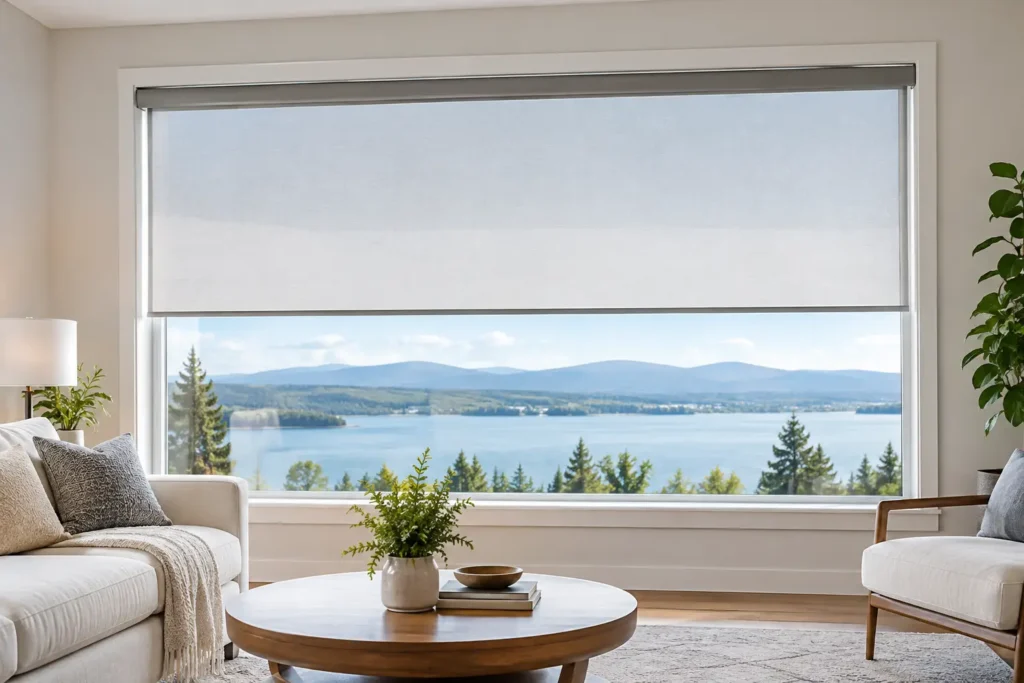
A picture window can be the strongest design feature in a room – until afternoon glare turns the sofa into the only seat no one wants to use. The best shades for picture windows preserve the view and daylight that made you love the window in the first place, while giving you real control over heat, privacy, and comfort.
Because picture windows are typically large, fixed panes of glass, they need more than an off-the-shelf solution. The scale magnifies every detail: fabric texture, bracket placement, light gaps, operating method, and whether the treatment stacks neatly when raised. A custom approach helps the shade feel intentional rather than like an afterthought pasted over a beautiful window.
What Picture Windows Need From a Shade
Picture windows do not open, so you do not need to plan around handles or ventilation. That simplifies the decision, but their wide glass area creates a few demands of its own. In Los Angeles and Orange County homes, direct sun can bring substantial glare, fading, and heat gain, especially on south- and west-facing walls.
The right shade depends on what the room needs most. A living room with a hillside or garden view may call for a shade that filters sun without blocking visibility. A street-facing family room may need daytime privacy as well as nighttime coverage. In a bedroom, better insulation and room darkening may matter more than maintaining a clear view at every hour.
Mounting also matters. An outside mount can make a picture window appear taller and wider, cover more of the glass, and reduce edge light. An inside mount offers a cleaner, more architectural look when the window has enough depth and a square opening. Professional measuring is particularly valuable on large windows, where even a small variation can affect alignment and coverage.
The Best Shades for Picture Windows by Priority
Solar shades for views, glare, and daytime comfort
Solar shades are often one of the best choices for picture windows with a view. Their woven performance fabric filters sunlight and UV exposure while allowing you to see outside during the day. They are especially useful in great rooms, offices, and dining areas where glare on screens or tabletops is a daily frustration.
Openness factor is the key choice. A lower openness fabric provides more glare reduction and privacy but softens the outward view. A higher openness fabric gives a clearer view and admits more light, though it provides less protection from bright sun. Darker fabrics generally offer better visibility outward, while lighter colors can reflect more heat and coordinate easily with softer interiors.
There is a trade-off: solar shades do not provide full nighttime privacy when interior lights are on. For a window facing close neighbors or a busy street, they may work best when paired with side panels or a second privacy layer.
Roller shades for a clean, versatile finish
Roller shades suit picture windows because they are simple, tailored, and available in a wide range of fabrics. A light-filtering roller shade can gently diffuse harsh California sunlight while keeping the room bright. A room-darkening or blackout fabric offers more coverage for media rooms, bedrooms, and spaces where the window faces intense afternoon sun.
This style rolls into a compact profile, making it a strong option when you want the shade to disappear as much as possible when raised. A decorative fascia or fabric-wrapped valance can conceal the roller for a more finished appearance. With large windows, selecting a quality hardware system is essential so the shade lifts evenly and remains stable over time.
Roller shades are ideal for homeowners who prefer a minimal look, but fabric selection does the design work. A plain white shade may look crisp in a contemporary room, while a linen-look weave can add warmth to a transitional or coastal-inspired space.
Cellular shades for insulation and soft light
Cellular shades, also called honeycomb shades, are a practical answer for picture windows that feel hot in summer or cool near the glass in winter. Their cell-shaped construction traps air, helping reduce heat transfer through a large expanse of glass. They also soften incoming light beautifully, making them a comfortable choice for bedrooms, nurseries, and casual living spaces.
For maximum flexibility, consider a top-down/bottom-up style where appropriate. On a large fixed window, this lets you lower the top portion to bring in daylight while keeping the lower part covered for privacy. Day-and-night cellular shades add another useful option by combining a light-filtering fabric with a room-darkening fabric in one treatment.
The trade-off is visual. Cellular shades offer a softer, more textured appearance than roller or solar shades, and they do not preserve an open view when lowered. They are best for spaces where temperature control and privacy are more valuable than seeing outside all day.
Roman shades for warmth and decorative impact
Roman shades bring fabric, texture, and a more tailored decorative presence to a picture window. They can be a particularly good fit for formal living rooms, dining rooms, primary bedrooms, and homes where the window treatment needs to support the furniture and overall design rather than fade into the background.
Choose a flat Roman shade for a cleaner profile or a softly structured style for added dimension. Lined fabrics improve privacy and light control, while a blackout liner can make the shade more functional in a bedroom. The fabric selection can repeat colors from upholstery, rugs, or accent pillows to create a cohesive room.
Roman shades stack higher than roller shades when open, so they can cover part of the glass at the top. This is usually manageable with thoughtful placement, but it is worth considering when the picture window has a view you want fully visible. Larger Roman shades may also require multiple sections to maintain proper proportion and dependable operation.
Woven wood shades for natural texture
Woven wood shades add character that manufactured fabrics cannot always replicate. Made from materials such as bamboo, grasses, reeds, and natural fibers, they work well in homes with warm woods, organic finishes, and relaxed California style.
On a picture window, woven shades make a clear design statement. They filter light in an appealing, dappled way, but their natural weave can leave small openings. Adding a privacy or blackout liner gives you more control without losing the texture of the front material.
These shades are better for ambiance than precise view preservation. They are a strong choice when the room needs softness and personality, but a solar shade may be more practical when glare control and a clear exterior view are the first priorities.
Motorized shades for wide or hard-to-reach glass
Motorization is not a shade style, but it can be the most valuable feature on a large picture window. Wide shades can be awkward to raise manually, and high windows may be difficult to reach at all. Motorized operation lets you adjust light with a remote, wall control, or compatible smart-home system.
For rooms with strong afternoon exposure, scheduled operation can lower shades before the room overheats and raise them later to restore the view. Cordless motorized shades also provide a clean appearance and remove dangling cords, an advantage in homes with children or pets.
Battery-powered systems can be a practical choice for many existing homes, while hardwired motorization may make sense during a renovation or new build. The best option depends on window access, electrical planning, and how often you expect to use the shades.
How to Choose the Right Fabric and Color
Once you select the shade style, the fabric determines much of the final result. For a bright room, white and pale neutral fabrics reflect more light and maintain an airy feel. Gray, charcoal, bronze, and darker weaves can improve outward visibility with solar shades, but they create a stronger visual frame around the glass.
Consider what the shade looks like from both inside and outside. Many homeowners want coordinated street-facing windows, especially on a front elevation. If privacy is a concern, test the fabric under daytime and nighttime conditions. A fabric that feels private during the day may become more transparent after dark when indoor lights are brighter than the exterior.
For large picture windows, avoid choosing only from a small sample held in your hand. Texture, color, and openness can read very differently across a wide span of glass. Seeing full-size options in the actual room makes it easier to judge how the material responds to your wall color, flooring, sunlight, and view.
Custom Fit Makes the Difference on Large Windows
Picture windows are unforgiving of uneven measurements and poorly selected hardware. A shade that is slightly too narrow can leave distracting side gaps. One mounted a fraction off level is easier to notice across a broad window. For oversized openings, product weight, mounting surface, and lift system capacity should all be reviewed before ordering.
A professional consultation gives you a chance to compare fabrics in your home, review mounting options, and choose a treatment that works with the room instead of simply covering the glass. Blinds by Design brings that guidance, product selection, custom measurement, and professional installation together for homeowners and offices throughout the Los Angeles area.
Start with the moment that bothers you most: glare during a work call, heat on the west wall, a lack of privacy after sunset, or a view that deserves to stay visible. That answer will usually point you toward the picture-window shade that feels right every day.