
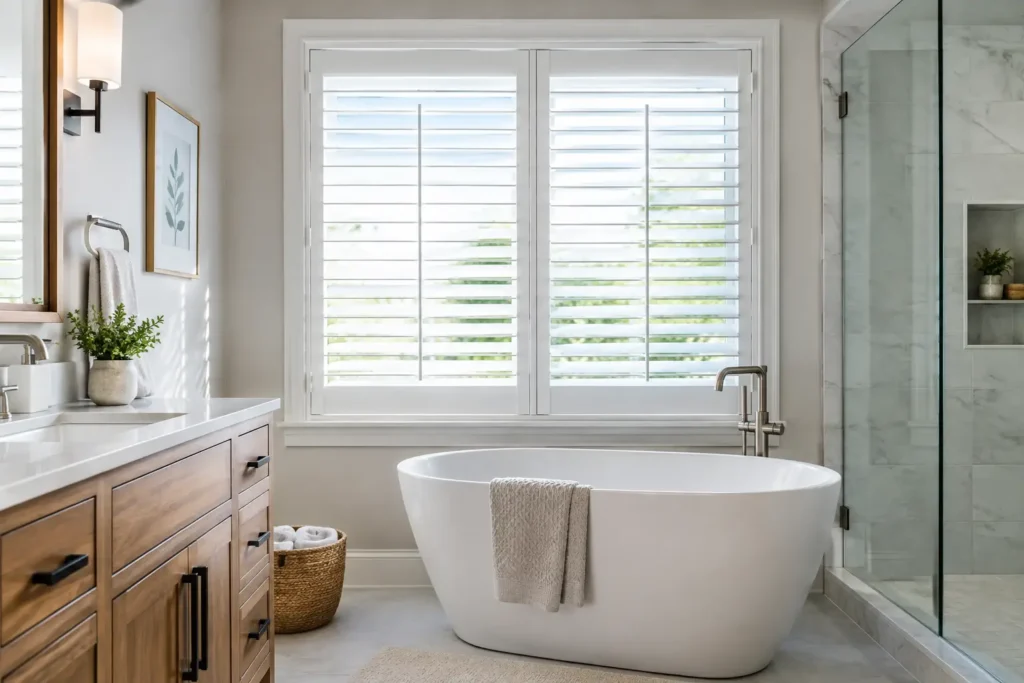
A bathroom window has a demanding job. It needs to protect privacy without making a small room feel closed in, manage bright California sun, and stand up to steam from daily showers. The best shutters for bathrooms solve all three problems, but only when the material, fit, and panel layout are chosen for the room rather than copied from another part of the house.
For many Los Angeles and Orange County homeowners, shutters are a natural choice because they create a clean architectural finish while giving you precise control over light and sightlines. The key is avoiding materials that look beautiful on day one but can swell, warp, or show wear after repeated exposure to humidity.
What Makes a Bathroom Shutter a Good Choice?
Bathrooms are not all equally damp. A large primary bath with a powerful exhaust fan and a window far from the shower may have moderate humidity. A compact hall bath, especially one used by children or guests, can stay damp longer and receive frequent splashes. That distinction should guide your material selection.
A well-designed bathroom shutter should resist moisture, clean easily, and continue to operate smoothly after years of regular use. It should also fit tightly enough to look intentional without interfering with window cranks, trim, or nearby fixtures. Custom measurement matters here. Even a small gap can create an awkward privacy issue when the window faces a neighboring property.
Shutters also offer a practical advantage over many fabric treatments: their louvers can be tilted for daylight while keeping direct views into the room limited. This is especially useful for street-facing bathrooms and homes with closely spaced side yards.
The Best Shutters for Bathrooms by Material
Composite shutters are the most dependable all-around option
For most bathrooms, composite shutters are the strongest recommendation. These shutters are made from engineered materials designed to handle moisture and changing temperatures better than natural wood. They have a substantial feel, hold their shape well, and are available in finishes that complement both traditional and contemporary bathrooms.
Composite is a particularly good fit for bathrooms with regular steam, windows near a tub or shower, and households that want a premium look without worrying about routine moisture exposure. It also works well when shutters will be installed throughout the home and you want a consistent style from room to room.
Not every composite product is made the same way, so construction details matter. A quality shutter should have durable louvers, dependable hinges, and a finish that will not easily chip or discolor. Seeing samples in the actual bathroom lighting can help reveal whether a white has warm, cool, or neutral undertones against tile, paint, and cabinetry.
Vinyl or PVC shutters work well in high-moisture spaces
Vinyl and PVC shutters are another smart option for humid bathrooms. Their moisture resistance makes them well suited for areas close to showers, tubs, and sinks. They are easy to wipe down, making them practical for busy family bathrooms where water spots, hairspray, and cleaning products are part of everyday life.
The trade-off is appearance and weight. Some vinyl shutters can have a more casual look than higher-end composite options, and lower-quality products may feel lighter or less rigid. Larger windows may require additional support to prevent sagging over time. For a small or medium bathroom window, however, a well-made PVC shutter can be an excellent value.
Wood shutters are best reserved for lower-humidity bathrooms
Natural wood shutters bring warmth, rich grain, and a classic custom look that many homeowners love. In a powder room or a well-ventilated bathroom where the window is far from water, wood can be appropriate. It can be especially appealing when the bathroom has wood cabinetry, traditional millwork, or a design style that calls for a stained finish.
Still, wood is not the first choice for a bathroom with consistent steam. Natural wood can react to moisture over time, even when painted or sealed. It may expand, contract, or develop finish issues in conditions that composite or PVC handles with less concern. Choosing wood for a damp bath is not automatically wrong, but it should be a deliberate design decision with realistic expectations.
Choose the Right Louver Size for Privacy and Light
Material is only half the decision. Louver size affects how the shutters look and how they perform. Larger louvers create a more open view when tilted, allow more daylight into the room, and suit many modern bathroom designs. They can make a modest window appear more generous.
Smaller louvers offer a more traditional appearance and can provide finer light adjustment. They may also feel more proportional on a narrow bathroom window. There is no universal best size. The right choice depends on the dimensions of the window, the ceiling height, and whether the bathroom design leans classic, transitional, or contemporary.
For privacy, the direction of the louvers matters as much as their size. Tilting louvers upward often allows natural light to enter while limiting views from outside at typical eye level. A professional consultation can help you test those sightlines from both inside and outside the home before the shutters are ordered.
Full-Height, Café, or Tier-on-Tier Shutters?
Full-height shutters cover the entire window and remain the most popular option for bathrooms. They offer the cleanest finished look and give you complete control over privacy. A divider rail can separate the upper and lower louvers, allowing you to close the lower section for privacy while opening the top section for light.
Café-style shutters cover only the lower portion of the window. They work nicely when the window is high enough that the upper glass does not create a privacy concern, or when you want to preserve a bright, open feel. They are often a charming choice for a powder room, though they are less practical for a bathroom that needs full coverage at night.
Tier-on-tier shutters have independently operating upper and lower panels. This option offers exceptional flexibility: keep the lower panels closed, open the top panels, or close everything when complete privacy is needed. They cost more because of the added construction, but they can be worth it for prominent windows or bathrooms where light and privacy change throughout the day.
Details That Make Bathroom Shutters Work Better
A few practical decisions can make a noticeable difference after installation. Hidden tilt mechanisms create a clean, updated appearance and eliminate a center rod that can collect dust. Traditional tilt rods remain a good choice when they suit the home’s architectural style or when you prefer a more classic shutter look.
Color deserves more thought than simply choosing white. Bright white can look crisp beside cool gray tile and modern fixtures, while off-white or soft cream may better complement warmer stone, brass hardware, or ivory cabinetry. Matching the shutter color exactly to trim can create a built-in appearance, while a subtle contrast can define the window as a feature.
Also consider how the window opens. A shutter panel must be configured so it does not block a crank handle, interfere with a sliding sash, or make it difficult to reach a lock. In tight bathrooms, the swing of a shutter panel should be planned around mirrors, towel bars, and vanity lighting. These are the kinds of details that are easy to miss when buying off the shelf and easy to address with in-home measuring.
Why Custom Installation Matters in a Bathroom
Bathroom windows are often smaller, set above tubs, or surrounded by tile and trim. They can be out of square, particularly in older homes. Ready-made shutters rarely account for those conditions, which can lead to uneven gaps, difficult operation, and a result that looks less polished than expected.
A custom process starts with the room itself: moisture level, window function, view, sunlight, existing finishes, and budget. Exact measuring then determines the right mounting approach and panel configuration. Professional installation helps ensure the frame is level, the louvers close evenly, and the finished shutters feel like part of the home rather than an add-on.
Blinds by Design brings samples and design guidance to the home, so homeowners can compare materials and colors where the shutters will actually live. That makes it easier to choose a solution that works with the bathroom’s light, tile, fixtures, and everyday routine.
Care for Bathroom Shutters Without Overcomplicating It
Moisture-resistant shutters are low maintenance, not no maintenance. Wipe louvers periodically with a soft microfiber cloth or a lightly damp cloth, then dry them if needed. Avoid abrasive cleaners, harsh solvents, or soaking the shutter components. Good ventilation remains useful even with composite or PVC shutters, so run the exhaust fan during and after showers.
If louvers begin to feel stiff or a panel does not align correctly, address it early rather than forcing it. A minor adjustment can protect the shutter hardware and preserve smooth operation.
The right bathroom shutters should make a private room feel brighter, more finished, and easier to live with every day. A free in-home consultation is a practical next step when you want to compare moisture-resistant options, confirm the best configuration, and choose a custom fit with confidence.