
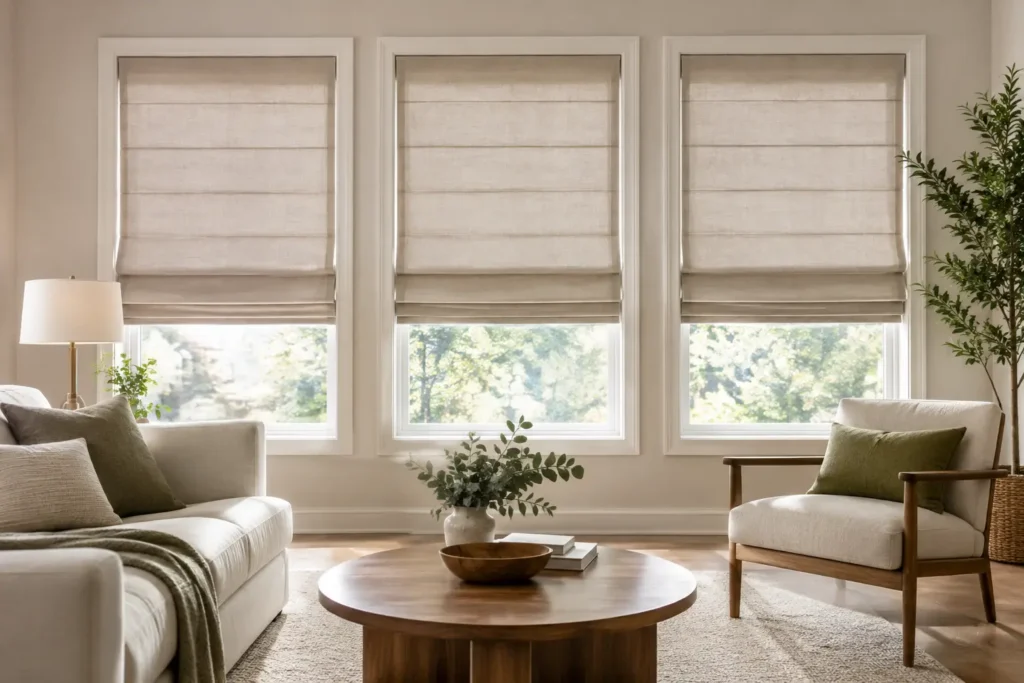
A Roman shade can look perfectly chosen in a photo and still feel wrong once it is hanging in your own room. The fabric may read darker against your wall color, the fold style may crowd a shallow window, or afternoon sun may reveal that you need more lining than expected. That is why homeowners searching for custom roman shades near me often need more than a catalog. They need to see options in the space, understand the trade-offs, and have the finished shade measured and installed for a dependable fit.
For homes and offices across Los Angeles County and Orange County, custom Roman shades offer a tailored way to bring softness, privacy, and practical light control to the window. The right choice should support how you use the room, not just match the décor.
What “Custom Roman Shades Near Me” Should Include
A nearby provider is valuable when the service goes beyond placing an order. Roman shades are made for specific window dimensions, mounting preferences, fabric selections, and operating needs. Small details can change both the appearance and performance of the finished treatment.
An in-home consultation allows you to compare fabric color in your natural light, hold material next to furniture and flooring, and consider the view outside the window. It also gives a window treatment specialist the opportunity to identify practical concerns, such as limited depth for an inside mount, window handles, uneven trim, or doors that need clearance to open comfortably.
This local, hands-on approach is especially helpful in sun-filled Southern California homes. A bright living room may benefit from a light-filtering fabric that softens glare without making the room feel closed in. A bedroom facing a neighboring property may call for a privacy lining or room-darkening option. The best solution depends on the room, orientation, and your priorities.
Why Custom Roman Shades Make a Difference
Roman shades combine the softness of drapery with the tidy profile of a shade. When raised, they stack into horizontal folds. When lowered, they create a clean, fabric-covered panel that can feel relaxed, tailored, or more decorative depending on the style you select.
Ready-made shades can be useful for a temporary need or a standard-size window, but they often leave compromises behind. Widths may not align well with the trim, lengths can be limited, and the available fabrics may not work with the rest of the room. Custom shades are made to the actual opening and can be specified around the details that matter most.
Fabric sets the mood and the function
The fabric is usually the first decision homeowners notice, but it does more than establish color. A textured linen-look material can bring warmth to a casual family room. A smooth woven fabric may feel more polished in a dining room or office. Pattern can create a focal point at a single window, while a quiet neutral can make a set of windows feel cohesive rather than busy.
Fabric openness and lining affect light control. Unlined materials offer a lighter, more relaxed appearance but may provide less privacy at night. Privacy-lined shades offer better coverage while preserving a soft glow during the day. Room-darkening and blackout options are often a smart choice for bedrooms, media rooms, and spaces where streetlights or early morning sun are disruptive.
The fold style changes the finished look
Flat Roman shades have a clean, modern face when lowered, making them well suited to contemporary interiors or patterned fabrics. Soft fold styles create more texture and dimension, which can complement traditional, transitional, and comfortable casual spaces. Some styles look especially full when raised, so window height and available space above the opening should be considered before making a final choice.
A specialist can help you choose a style that relates well to the room rather than selecting a design in isolation. A compact shade may be preferable over a kitchen sink or a door. In a formal living room, a more decorative fold may be exactly what gives the window a finished appearance.
Mounting affects light gaps and proportions
Inside-mounted Roman shades sit within the window opening for a built-in look. They work beautifully when the opening is deep enough and the frame is relatively square. However, an inside mount can leave narrow light gaps along the sides, which may not be ideal for a bedroom or a room where privacy is the main concern.
Outside-mounted shades are installed above or beyond the opening. They can make a small window appear larger, cover uneven trim, and reduce side light gaps. The trade-off is that the shade needs wall space around the window and must be positioned carefully so it does not interfere with molding, doors, or nearby furnishings.
What to Expect From an In-Home Consultation
The most useful Roman shade consultation is a working design appointment, not a rushed sales visit. Start by discussing how each room is used. Is the goal to reduce heat and glare in a west-facing office? Add privacy to a bathroom? Create a softer backdrop for a remodeled living room? Your answers guide the fabric, lining, mounting, and control options.
Next comes precise measuring. Custom window treatments depend on accurate measurements, particularly when windows have trim, recesses, or multiple openings that should align visually. Professional measuring removes the uncertainty of ordering based on a rough tape-measure reading.
Then you can review samples in the actual setting. Wall paint, flooring, and daylight can alter how a color appears. A fabric that looks cream in a showroom may look gray against cool-toned paint, while a warm neutral can feel much richer beside wood cabinetry. Seeing choices at home helps avoid expensive second-guessing.
Finally, professional installation ensures the shade is level, secure, and operating properly. This is not simply a cosmetic detail. Correct placement affects how the folds stack, whether the shade clears the sill, and how evenly it covers the window.
Choosing Roman Shades for Each Room
There is no single best Roman shade for every window. A thoughtful plan can keep the home coordinated while allowing each room to perform differently.
In bedrooms, prioritize privacy and darkness first, then choose a fabric that supports the room’s overall mood. A lined shade in a calming neutral can provide a restful look without feeling heavy. For nurseries or children’s rooms, cordless or motorized operation may be worth considering for convenience and a cleaner appearance.
Living rooms often allow more freedom with texture and pattern. If the room has simple furniture and neutral walls, Roman shades can introduce a woven texture or understated print. If the furnishings are already layered with pattern, a solid fabric may give the eye a place to rest.
Kitchens and bathrooms need materials that suit the environment. A shade near a sink or cooktop should be selected with everyday maintenance in mind. In these rooms, a simpler style and practical fabric often make more sense than a delicate material that requires extra care.
For offices, the priority may be screen glare, privacy during meetings, and a finished appearance for clients or employees. Light-filtering Roman shades can soften harsh daylight while maintaining a bright, professional setting. Motorized options can be especially useful for larger windows or hard-to-reach areas.
Budgeting for a Custom Shade Project
The cost of custom Roman shades varies based on window size, fabric, lining, fold style, control system, and installation requirements. Motorization and premium materials generally add to the investment, while a straightforward manual shade in a standard fabric may keep the project more modest.
It helps to think about value over the life of the treatment. A well-made shade with professional measurement and installation is designed to fit properly, operate reliably, and support the room for years. If budget is a concern, prioritize the rooms where privacy, sun control, or visual impact matters most, then build the project in phases.
A Local Partner Makes the Details Easier
For homeowners in Downey, Norwalk, Pico Rivera, Bellflower, Lakewood, Whittier, Paramount, Santa Fe Springs, and surrounding communities, an appointment-based service keeps the process focused on your actual windows. You do not have to guess from a screen or coordinate separate measurement, product, and installation providers.
Blinds by Design brings more than 23 years of window treatment experience to the consultation process, with guidance on shades, shutters, blinds, motorization, installation, and repair. The goal is to help you make a confident choice that fits your space, style, and budget.
If you are considering custom Roman shades, schedule a free in-home consultation before settling on a fabric or style. A few minutes spent comparing options at the window can turn a good-looking idea into a treatment that feels right every time you walk into the room.