
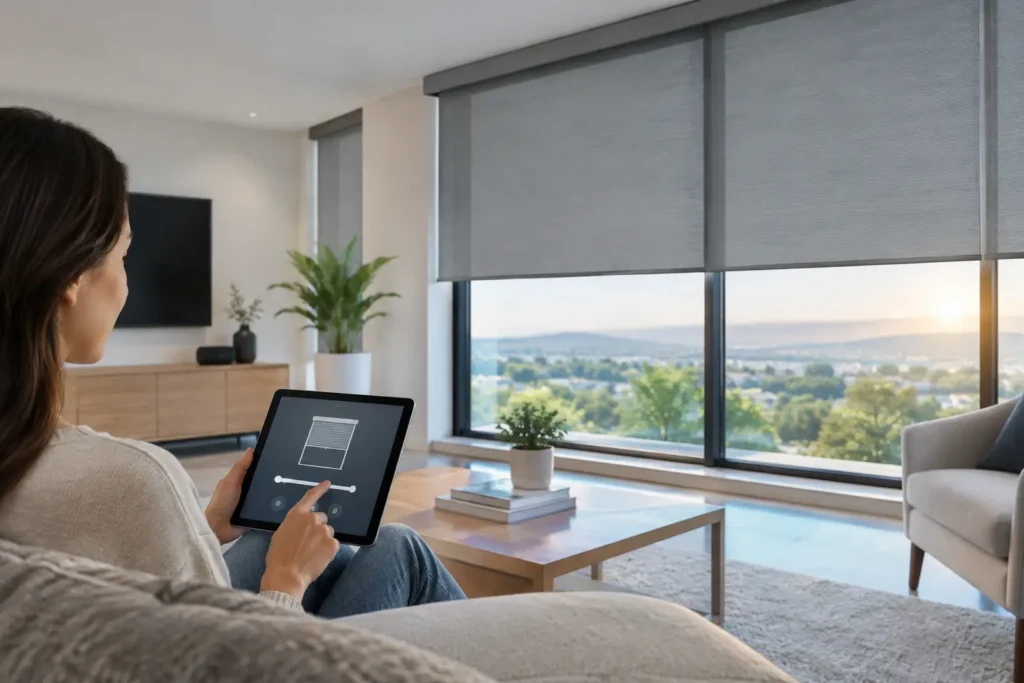
A west-facing living room in Los Angeles can go from bright and inviting to overheated in a matter of hours. That everyday reality is why smart blinds and the future of homes are closely connected. Automated window treatments give homeowners a more convenient way to manage sunlight, privacy, comfort, and energy use without constantly adjusting cords, wands, or shades by hand.
For many homeowners, the appeal is not technology for its own sake. It is the ability to wake up to filtered morning light, protect furnishings from harsh afternoon sun, and close the room off for privacy at the touch of a button. When the right product is measured, customized, and installed correctly, motorization becomes a practical part of a better-functioning home.
Why Smart Blinds Fit the Future of Homes
Smart blinds are motorized window coverings that can be operated with a remote, wall control, smartphone app, voice assistant, or programmed schedule. Depending on the system, they can raise, lower, tilt, or adjust to preset positions throughout the day.
The real benefit is consistency. Instead of remembering to lower shades before leaving for work or closing blinds when the afternoon sun reaches the family room, homeowners can set routines that handle those tasks automatically. This is especially useful in homes with tall windows, multiple rooms, hard-to-reach openings, or large sliding doors.
In Southern California, sunlight is both a design feature and a comfort consideration. Natural light makes a space feel open, but unfiltered exposure can create glare on screens, warm up interiors, and fade flooring, artwork, and upholstery over time. Smart window treatments allow homeowners to enjoy the light while having more control over when and how it enters the room.
They also support privacy without making a home feel closed in all day. A schedule can lower shades at dusk, for example, while leaving them open during daylight hours. That small adjustment can make a house feel more comfortable without adding another task to the evening routine.
Convenience Matters, but So Does the Right Product
Not every motorized treatment solves the same problem. The best choice depends on the window, the room, the desired look, and how the household uses the space.
Motorized roller shades are often a strong option for clean, contemporary rooms, large windows, and areas where glare control is the priority. They can be selected in materials ranging from light-filtering fabrics to blackout options, giving homeowners flexibility between soft daylight and near-total room darkening.
Cellular shades are worth considering when insulation and energy efficiency are high on the list. Their honeycomb construction can help reduce heat transfer at the window, which may be particularly helpful in sun-exposed bedrooms, upstairs spaces, and rooms that become uncomfortable late in the day.
For homeowners who prefer architectural detail and adjustable light control, motorized blinds or shutters may be a better fit. Tilting slats can direct light upward or downward while preserving some privacy. The result is different from a shade that simply raises or lowers, and it can complement traditional, transitional, or coastal-inspired interiors.
The right answer is rarely based on appearance alone. A beautiful fabric may not provide enough privacy for a street-facing window. A blackout shade may be ideal for a nursery but feel too heavy in a dining room that benefits from soft filtered light. Professional guidance helps match the treatment to the way each room actually works.
Smart Features Should Make Life Easier
Home automation can sound complicated, but smart blinds do not need to turn a home into a technical project. A simple remote-operated system is often enough for homeowners who want easier control over a large window or a hard-to-reach treatment.
For others, schedules are the feature that makes the biggest difference. Bedroom shades can open gradually in the morning. Living room treatments can lower during the hottest part of the afternoon. Office shades can be adjusted before a video call to reduce backlighting and screen glare.
Voice control and app control may be helpful for busy households, older adults, or anyone with limited mobility. They can also be valuable for second-story windows, skylights, and windows positioned behind furniture. Still, the most advanced system is not always the best system. If a homeowner does not plan to use app controls or voice commands, a straightforward motorized option may offer better value.
Battery-powered motors are popular because they can reduce the need for visible wiring and work well in many existing homes. Hardwired systems can be an excellent choice during new construction or a major remodel, particularly when several treatments will be automated throughout the home. Solar charging options may also be available for certain applications. Each option has installation and maintenance considerations, which should be discussed before ordering.
Design Is Still the First Decision
Technology should support the design of a room, not distract from it. The fabric, color, opacity, valance style, and mounting method all affect the finished appearance just as much as the motor does.
A motorized shade can disappear into the background with a clean, minimal look, or it can become a softer decorative layer in a bedroom or formal living area. Pairing shades with drapery panels can add warmth and visual depth while keeping the ease of motorized light control. Shutters can bring a tailored, permanent appearance while offering a different approach to privacy and sunlight.
Custom sizing is particularly important with automated treatments. A poor fit can create light gaps, interfere with door handles or trim, and make even a quality product look unfinished. Accurate measurement also helps ensure the treatment operates properly and the motor has the right capacity for the size and weight of the covering.
This is one reason an in-home consultation is valuable. Looking at samples next to the wall color, flooring, furniture, and natural light provides a much clearer picture than choosing from a screen. It also gives an installer the opportunity to assess window depth, mounting surfaces, power access, and any obstacles before the product is ordered.
What to Consider Before Choosing Smart Blinds
Before selecting an automated treatment, start with the daily problem you want it to solve. Is the room too hot in the afternoon? Do you need more privacy at night? Are the windows too high to reach comfortably? Do you want a better sleep environment, less glare in a home office, or a more polished look for a remodeled space?
Then consider how much automation you will realistically use. A single remote may be perfect for one set of patio doors. Whole-home scheduling may make sense for a larger property with many sun-exposed windows. The goal is not to add features that go unused. It is to choose controls that fit your household naturally.
Budget also varies by window size, fabric selection, motor type, control system, and installation requirements. Motorization is an investment, but it can add long-term convenience and help protect interiors from excessive sunlight. Prioritizing the rooms that receive the most use or the most direct sun is a sensible way to begin if automating every window is not the plan.
Finally, think about service after installation. Batteries will eventually need attention, settings may need to be updated, and window treatments may require repair or adjustment over time. Working with a local company that understands the product and stands behind the installation can make ownership much easier.
A Custom Approach Makes the Difference
Smart blinds work best when they are chosen as part of the home, not as an afterthought. Window direction, room function, décor, privacy needs, and preferred controls should all shape the recommendation.
Blinds by Design helps homeowners and office clients throughout Los Angeles County and Orange County evaluate these details in person. With a mobile showroom, custom measurements, product guidance, and professional installation, the process is designed to keep decisions clear from the first consultation through the finished installation.
The future of home comfort does not require complicated technology in every room. It can start with one thoughtfully selected motorized shade that makes a sunny space cooler, more private, and easier to enjoy. A free in-home consultation is a practical next step for seeing how the right smart window treatment could work in your own space.