
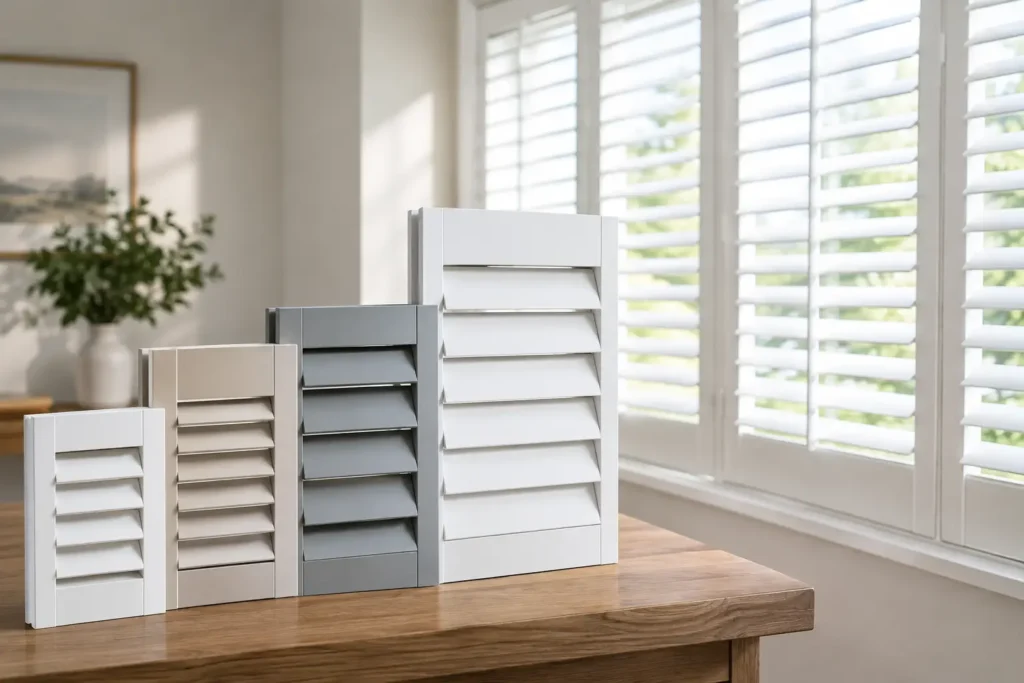
A shutter can look completely different depending on the width of its louvers. That detail affects how much light enters a room, how clearly you can see outdoors, how private the space feels, and whether the finished window looks traditional or more contemporary. This guide to shutter louver sizes helps Los Angeles homeowners make that choice with confidence before ordering custom shutters.
For most homes, the decision comes down to three common louver widths: 2 1/2 inches, 3 1/2 inches, and 4 1/2 inches. None is automatically the best choice. The right size depends on the window, the room’s purpose, the amount of direct sun, and the style you want throughout the home.
Why Shutter Louver Size Matters
Louvers are the horizontal slats within a shutter panel. When they tilt open, they control the direction and amount of incoming light. Wider louvers create larger openings between slats. That can provide a more open view and a cleaner look, but it also changes how the shutter relates to the scale of the window and room.
Smaller louvers create more horizontal lines across the window. They are often a natural fit for traditional interiors, smaller windows, and homes where a more detailed architectural appearance is preferred. Because there are more slats, they can offer precise light adjustment, although they do not create quite the same broad view when open.
Louver size also affects the appearance from outside. On a front elevation with several visible windows, shutter proportions can either support the home’s architecture or feel out of place. This is one reason custom measurement and in-home design guidance are worth considering instead of choosing a size from a sample photo alone.
Guide to Shutter Louver Sizes: The Main Options
2 1/2-inch louvers
A 2 1/2-inch louver is the most traditional of the common options. Its narrower profile gives the shutter a classic, detailed appearance that works well in cottages, traditional homes, and rooms with smaller or more divided windows.
This size is also a practical choice when windows are not especially tall or wide. Wider louvers on a compact window can sometimes look oversized, while 2 1/2-inch louvers preserve visual balance. They are often appealing in bathrooms, laundry rooms, and other spaces where privacy matters as much as the view.
The trade-off is that more louvers are needed to cover the same window height. When opened, the view has more horizontal interruptions than it would with larger louvers. For homeowners who want the least obstructed sightline to a garden, pool, or city view, a wider option may be more satisfying.
3 1/2-inch louvers
For many Southern California homes, 3 1/2-inch louvers offer the most flexible middle ground. They provide a substantial view when opened while still looking proportionate on a wide range of window sizes. The result can feel tailored rather than overly formal or overly bold.
This is a strong choice for living rooms, bedrooms, dining areas, and home offices. It suits transitional interiors particularly well, where the goal is to blend classic elements with cleaner, more current furnishings. A 3 1/2-inch louver also coordinates easily when shutters are used across multiple rooms with different window dimensions.
If you are unsure where to begin, this size is often a useful starting point during a consultation. It gives you a clear reference point for comparing the more traditional 2 1/2-inch option against the more open 4 1/2-inch look.
4 1/2-inch louvers
A 4 1/2-inch louver makes a stronger visual statement. With fewer slats across the window, it creates a broad, uncluttered appearance and opens to a wider view. This size is especially popular in larger rooms, newer homes, and spaces with expansive windows or sliding glass doors.
It can be an excellent fit for a bright living area where you want to preserve an open connection to the outdoors. When tilted, wider louvers can still provide privacy and filter harsh afternoon sun. When opened, they give the window a more generous, less segmented appearance.
The consideration is scale. On small windows, wide louvers may dominate the opening instead of complementing it. They may also feel less appropriate in a room with very traditional trim, small-scale furnishings, or a historic design direction. The best choice is not always the widest louver. It is the one that looks intentional in the room.
Match Louver Width to Your Windows
Window size is one of the first details to consider. Larger windows usually have enough visual space to carry wider louvers well. Tall bedroom windows, broad picture windows, and patio doors often look balanced with 3 1/2-inch or 4 1/2-inch louvers.
Smaller windows can benefit from narrower louvers because the proportions remain more refined. This does not mean every small window requires 2 1/2-inch louvers. A room with several small windows, contemporary furnishings, and clean trim may still look excellent with 3 1/2-inch louvers. The surrounding design matters as much as the measurement itself.
Window shape matters, too. Arched, angled, and specialty windows require careful planning because louver placement, panel divisions, and operating clearance all affect the final result. These are situations where professional measurement can prevent costly compromises.
Consider Light, Privacy, and the Los Angeles Sun
In Los Angeles and Orange County, sunlight is rarely an afterthought. West-facing rooms can receive intense afternoon glare, while street-facing bedrooms may need dependable privacy without making the room feel closed in. Shutters let you adjust louvers throughout the day rather than choosing between fully open and fully covered.
Wider louvers allow more light through when open and can direct daylight toward the ceiling when tilted upward. That can brighten a room while reducing direct glare. Narrower louvers offer more individual slats for fine adjustments, which may appeal in spaces where light changes quickly or privacy is a constant concern.
For a ground-floor room near a sidewalk or neighboring property, louver size is only one part of the privacy plan. Panel configuration, divider rails, mounting position, and the height of nearby sightlines should also be considered. A custom consultation lets you evaluate those details from inside the actual room rather than guessing from a showroom display.
Choose a Size That Fits Your Interior Style
Louver width can quietly reinforce the design direction of a home. Narrow louvers tend to complement traditional, coastal, cottage, and more decorative interiors. Medium-width louvers work with a broad range of styles, from updated ranch homes to transitional spaces. Wide louvers are often at home in contemporary interiors with larger windows, simple millwork, and an open floor plan.
Color and material influence the effect as well. Bright white shutters with wide louvers can feel crisp and architectural. A warmer painted finish or wood-toned shutter with smaller louvers may feel more classic and layered. The goal is not to follow a fixed rule. It is to choose proportions that make the windows feel like part of the room’s design.
If you are installing shutters throughout the home, consistency is usually the safest approach. Using the same louver size in highly visible connected spaces creates a coordinated look. In some homes, however, it makes sense to adjust for a specialty window or a room with a very different purpose. A professional can help determine where consistency matters and where flexibility makes sense.
Do Not Overlook Operation and Installation Details
Louver size is highly visible, but it is not the only decision that affects daily use. You will also choose how shutter panels open, whether the louvers operate with a tilt rod or a hidden control system, and how the shutters fit around handles, locks, or trim.
For example, wide louvers may offer the open view you want, but a particular window may require panel divisions that influence the final look. A door near a walkway may need a configuration that keeps panels secure and easy to use. These details are easier to solve before fabrication than after installation.
Blinds by Design brings samples and design guidance to your home so you can compare louver widths against your actual windows, wall colors, furnishings, and natural light. Accurate measuring and professional installation help ensure the finished shutters operate smoothly and look properly proportioned.
The best shutter louver size is the one that supports how you live in the room – morning light in the kitchen, privacy in the bedroom, glare control in the office, and a view worth keeping open in the living room. Schedule a free in-home consultation when you are ready to see those choices in the space where they matter most.