
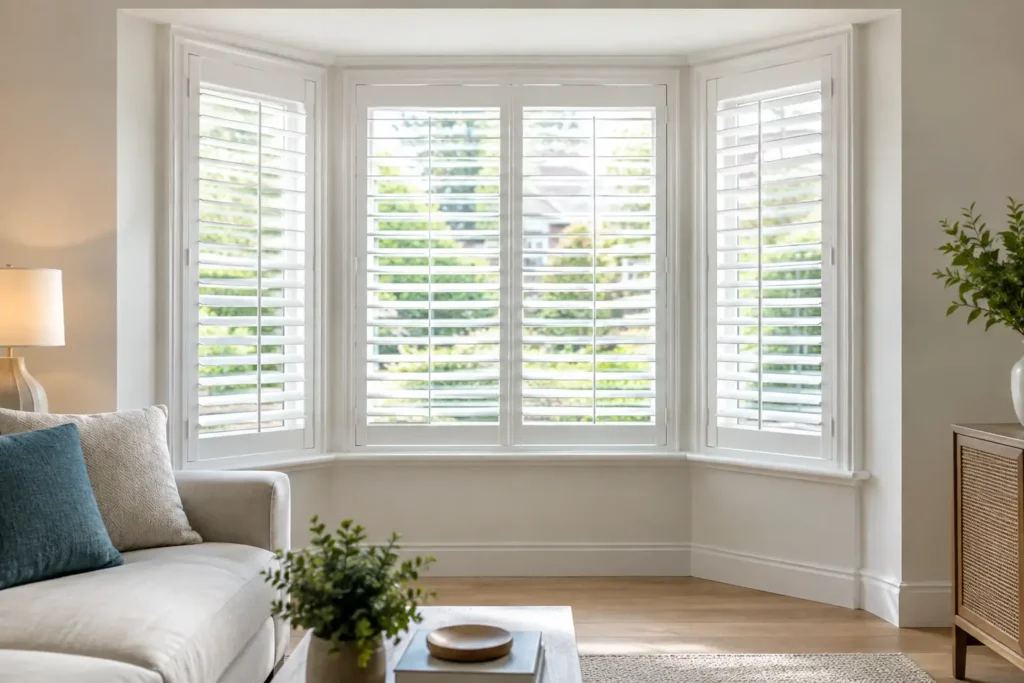
A bay window is more than a wide opening with extra glass. Its angled sides, changing light, and prominent position in the room make it a design feature worth treating carefully. The best shutters for bay windows need to follow each section precisely, preserve the architecture, and give you practical control over privacy and sunlight without making the window feel crowded.
For many Los Angeles and Orange County homes, custom plantation shutters are the strongest choice. They create clean lines across a multi-panel window, hold up well to daily use, and offer a level of light control that curtains alone cannot match. Still, the right shutter depends on the bay’s shape, the room’s purpose, the amount of direct sun it receives, and the material that best suits your home.
Why Bay Windows Need a Custom Approach
A bay window usually combines a larger center window with two smaller side windows set at an angle. Even when the windows appear symmetrical, their exact widths, depths, and angles can differ. Standard-size shutters rarely account for those details, which can lead to uneven panel spacing, awkward gaps, or shutters that interfere with the window’s handles and trim.
Custom shutters are measured as a complete installation, not as three unrelated windows. Each frame is designed to align with the next one, creating a balanced appearance from inside the room and from the curb. That attention to proportion matters especially in living rooms, dining rooms, primary bedrooms, and front-facing spaces where a bay window naturally draws the eye.
The mounting method matters, too. Depending on the trim depth and window configuration, shutters may be mounted inside the opening or built around it with a frame. A professional measurement identifies clearance concerns before fabrication, including cranks, locks, deep sills, and window seats.
The Best Shutters for Bay Windows by Material
Material affects more than appearance. It influences durability, weight, maintenance, and how well the shutters perform in sun-exposed or moisture-prone rooms.
Wood shutters for a warm, tailored finish
Wood shutters are a classic choice for bays in formal living areas, dining rooms, and homes with natural finishes. Their lighter weight makes them particularly well suited to large or wide shutter panels. They can also be painted or stained in a broad range of colors, helping the shutters coordinate with cabinetry, flooring, and architectural millwork.
The trade-off is that natural wood needs the right environment. A window that receives intense afternoon sun or sits near moisture may be better served by another material. High-quality finishes provide protection, but wood is generally not the first recommendation for a bathroom bay or a window exposed to frequent humidity.
Composite shutters for busy, sun-filled homes
Composite or engineered wood shutters offer a painted-wood appearance with dependable everyday durability. They are a popular option for homeowners who want crisp white shutters, substantial panels, and a practical material for high-use rooms.
For many Southern California homes, composite shutters strike an excellent balance. They suit bright family rooms and bedrooms, resist warping better than natural wood in changing conditions, and are easy to clean. Because composite materials can be heavier, panel sizing and hinge placement should be planned carefully, particularly on a large bay with tall windows.
Vinyl shutters for moisture resistance
Vinyl shutters are typically most appropriate for bathrooms, laundry rooms, kitchens, or other areas where moisture is a primary concern. They are easy to maintain and resist humidity well. However, their appearance and construction vary by product, so they may not offer the same furniture-like finish or wide-panel flexibility as premium wood or composite shutters.
For a prominent front-room bay, homeowners often prefer wood or composite because the visual impact is more refined. For a bathroom bay, vinyl can be the sensible long-term choice.
Choosing a Panel Layout That Works With the Angles
The beauty of a bay window comes from its geometry. Shutters should respect that shape rather than flatten it visually. In most cases, each window section receives its own shutter panels, allowing the center and angled sides to operate independently.
This setup makes daily use easier. You can tilt the louvers on the side windows to block a neighbor’s view while leaving the center section open for daylight. You can also open only the panels needed for access to the glass or sill.
Panel count should be based on width and weight, not a one-size-fits-all rule. A broad center window may look and function better with four narrower panels rather than two oversized ones. Narrow side windows may need a single panel each. The goal is an even, intentional rhythm across the full bay, with panel divisions that do not feel random or obstruct the view.
Shutter frames also need careful coordination at the corners. Small inconsistencies are noticeable where the bay angles meet, especially with white shutters against light walls. Custom fabrication and professional installation help keep reveal lines consistent and panels aligned.
Louver Size Changes the Look and the Light
Louver size is one of the most visible decisions when selecting shutters. Larger louvers create a more contemporary look and provide a clearer view when open. Smaller louvers feel more traditional and add more horizontal lines across the window.
A 3 1/2-inch louver is often a versatile choice for bay windows. It provides substantial light control without overpowering the proportions of many residential bays. Larger 4 1/2-inch louvers can look striking on expansive windows with a modern, open interior. Smaller louvers may fit a more traditional home or a bay with shorter window sections.
Consider the room’s lighting as well. Wide louvers let in more daylight when tilted open, but they can also allow more direct sun. In west-facing rooms, adjustable louvers make it easier to soften glare while keeping the space bright. Closed panels offer strong privacy at night, a valuable benefit for bays that face a street or neighboring property.
Full-Height, Café, or Tier-on-Tier Shutters?
Full-height shutters cover the complete window and are the most common choice for bay windows. They create a unified finish, offer full privacy, and give you control over light through the louvers. A divider rail can be added so the upper and lower louvers operate separately, which is useful when you want daylight above while maintaining privacy below.
Café-style shutters cover only the lower portion of the window. They work well when the bay has an attractive upper view, plentiful natural light, and a need for privacy at eye level. This style can feel lighter and more decorative, but it does not provide the full coverage many bedrooms or street-facing rooms require.
Tier-on-tier shutters have separate upper and lower panels that open independently. They offer exceptional flexibility, though they add panel lines and more visual detail. They are an excellent option for a traditional bay window where privacy and adjustable light control are both priorities. In a minimalist interior, full-height panels with a divider rail may deliver a cleaner result.
Details That Make the Finished Installation Look Better
The right color is usually one that supports the room rather than competes with it. Bright white shutters can sharpen a clean, modern interior and coordinate with white trim. Soft whites and warm neutrals can better suit cream walls, natural woods, or warmer paint colors. Stained wood shutters make more sense when the goal is to echo existing cabinetry or built-in furniture.
Do not overlook the sill. A deep bay sill may function as a display ledge or window seat, so the shutter design should preserve access and avoid unnecessary bulk. If the bay includes a bench, nearby furniture, or an air vent, panel swing and reach should be considered before installation day.
For a polished result, it also helps to think beyond the window itself. Shutters create a structured architectural finish, so they tend to look best when their color, louver scale, and frame profile relate to the rest of the room. A good consultation makes those choices easier because samples can be viewed in the actual light of your home.
Why Professional Measuring Matters for Bay Shutters
Bay shutters are not a project where approximate measurements are enough. A fraction of an inch can affect panel operation, frame alignment, or the way the shutters meet at an angled corner. Accurate measuring also confirms whether the window is square, whether trim needs accommodation, and how much clearance is available for proper operation.
At Blinds by Design, the in-home consultation brings material and color options into the space where they will be used. That allows homeowners to compare finishes against wall color, flooring, furnishings, and changing natural light before moving forward with a custom order and professional installation.
The best choice is the one that makes your bay window easier to live with every day. Choose shutters that fit the angles precisely, suit the conditions of the room, and give you the privacy and light control you actually need. A thoughtful in-home consultation is a simple next step toward a bay window that looks finished from every angle.